






















Paediatrician, researcher and broadcaster Dr Guddi Singh reflects on health inequality, justice-based medicine and why good clinical practice must begin by understanding the world that makes our patients ill.
The story behind the diagnosis
A child arrives in clinic carrying a label. Perhaps anxiety. School refusal. Possible attention deficit hyperactivity disorder (ADHD). Poorly controlled asthma. Non-adherence.
Sometimes the label is useful. But listen for long enough and another story may emerge.
The child with asthma lives in a damp flat. The teenager missing school is sleeping in temporary accommodation, sharing a room with siblings and trying to revise without quiet or privacy. The ‘difficult’ parent is choosing between the bus fare and topping up the gas meter.
The symptoms are real. The diagnosis may be real. But the explanation is often insufficient.
In paediatrics, this is especially stark. Children have so little control over their world. No child chooses the air that they breathe, the food in the fridge or whether their home is warm.
But this is not only a paediatric issue.
The child living with mould may become the adult with chronic respiratory disease. The adolescent growing up under stress may later present with hypertension. Social conditions are the long history behind patients in every specialty.
Social context is clinical evidence
Poverty, housing, food insecurity, racism, education, employment and social isolation all enter the consulting room. They shape who becomes ill, how early, whose symptoms are believed, and who can follow a treatment plan and access care.
Yet doctors are often taught two things that sit uneasily together. First: social determinants of health profoundly shape disease. Second: responding to them lies outside the proper boundaries of medical work. My own career has unfolded in the space between those statements.
As a paediatrician, I have seen social conditions become embodied in children. As a public health researcher, I have studied inequality patterned across populations. Through my empirical bioethics PhD, I asked what these realities mean for medical professionalism: what happens when clinicians recognise the causes of suffering, but feel unable – or professionally unauthorised – to respond?
The central proposition is simple: social context is not background information. It is clinical evidence.
Dr Guddi Singh
A patient repeatedly missing appointments isn’t simply ‘non-compliant’. Their absences are data. They may tell us about insecure work, unaffordable transport, caring responsibilities, language barriers, distrust or discrimination.
Understanding this does not make us less medical. It makes our diagnosis more accurate and our treatment more likely to work.
You cannot manage diabetes if food insecurity makes a stable diet impossible. You cannot control respiratory disease in a damp home. You cannot call a service efficient if it excludes those with the greatest need, and labels absence a ‘failure to engage’.
There can be no clinical excellence without equity. Equity is not something added after the ‘real medicine’ is complete. It is a condition that makes good medicine possible.
Between fixing everything and doing nothing
When I began my doctoral research, I thought that I was studying the healthcare system. Increasingly, I realised that I was studying us: professional habits, ideas about expertise and the boundaries around legitimate medical action.
The traditional image of the doctor is the ‘expert fixer’, armed with knowledge, skill and authority. This ‘fixer’ has achieved extraordinary things, but they are poorly suited to inequality, chronic disease, climate change and social distress – problems that no individual clinician can solve.
The danger is that when we cannot fix everything, we conclude that we can do nothing.
But there is a great deal between omnipotence and abdication.
We can ask better questions, refusing to turn hardship into moral judgement. We can document the conditions affecting health, work with community organisations, support housing applications or challenge unsafe discharges. We can ask whether services are designed around our patients’ lives.
None of this requires every doctor to become a housing officer, social worker or campaigner. But professional boundaries are not neutral. They shape what we notice, whose knowledge counts and which forms of suffering become medically visible.
In my own practice, I have heard that responding to hunger, insecure housing or inaccessible services was a departure from proper medicine: ‘That’s someone else’s job’.
Sometimes it is. No clinician should be expected to compensate for failed public policy. But ‘someone else’s job’ can become the phrase through which institutions abandon people. The more useful question is: what does this require me to see, name or do?
Inequality inside medicine
Inequality is not simply something that we observe in patients. It also shapes the institutions in which we work.
As a woman of colour in medicine, I have learned that professional life is not experienced equally. Some people are presumed competent; others must repeatedly prove it. Some are praised for confidence; others find the same quality recast as arrogance.
I sometimes joke that I could publish a meta-analysis of being interrupted in professional settings by those who are paler and maler, though rarely any righter. But the humour sits alongside something serious; who gets heard affects what medicine is able to know.
When clinicians, patients or communities are routinely discounted, medicine loses knowledge. The consequences affect diagnosis, research, service design and patient safety.
A young person may understand why a service is inaccessible to them better than those who designed it. A family may know what is driving their relative’s deterioration before the test results do. A teacher or community worker may see patterns invisible from the clinic. Listening to them is not a charitable concession; it is part of practising intelligently.
In fact, I have come to believe that listening is itself a form of medicine. Not because listening alone can repair a damp home, lift a family out of poverty or redesign an unsafe service, but because nothing useful can begin until we have understood what is actually happening.
Good listening changes the diagnosis. It changes whose knowledge counts. It changes what we notice, what we ask and what we are prepared to do next. And once I began to think of listening in this way, the consultation room started to feel too small.
Taking the stethoscope beyond the hospital
While making my BBC Radio 4 series Three ages of child, I wanted to listen more deeply – not only to patients, but to the country itself.
I describe the programme as ‘journalism with a stethoscope’. A stethoscope helps us listen to what’s happening within the body. The series became an attempt to listen to the body of society: children, families, teachers, youth workers and community organisations living with the consequences of decisions.
In Hartlepool, I met families relying on a baby bank for early-life essentials. In Tower Hamlets, I heard how schools were responding to hunger. In Devon, I met young people redesigning support that had failed them.
These experiences reinforced the concept that health is built – or broken – in ordinary places where life unfolds. Homes. Schools. Workplaces. Communities. The doctor often meets people afterwards.
My broadcasting work, therefore, hasn’t felt separate from medicine. It’s another way of listening, enlarging the frame and bringing the world outside the hospital back into clinical thought.
Towards justice-based medicine
Clinical medicine, research, philosophy, broadcasting and co-production may look like separate careers. For me, they are ways of approaching the same question:
What does it mean to be a good doctor in the 21st century?
I think of the answer in terms of ‘justice-based medicine’.
Justice-based medicine does not replace evidence-based medicine. Rather, it asks us to take the evidence’s implications seriously. It combines scientific excellence with social understanding, moral literacy and practical attention to avoidable conditions that shape health.
It means moving from symptoms alone to symptoms in context; from individual blame to structural curiosity; from professional omniscience to collaboration; and to asking whether care can work in a person’s life.
This is not a soft or sentimental project. It is about effectiveness and efficiency. It can prevent repeated admissions and failed treatment plans. A system that doesn’t understand the social causes of illness will keep spending vast resources to treat their consequences.
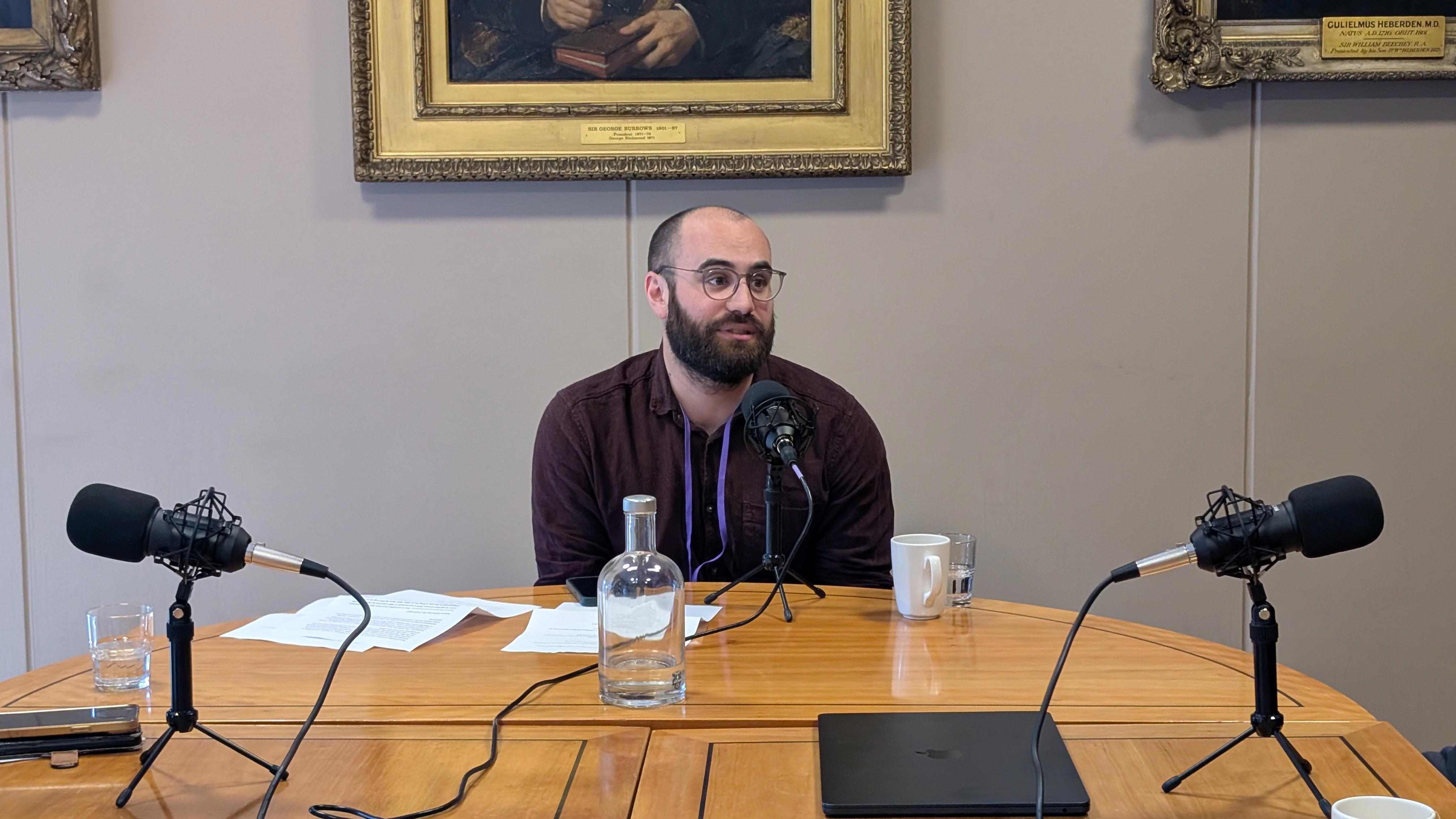
Dr Rohan Mehra recording an episode of the RCP Medicine podcast.
What this moment asks of us
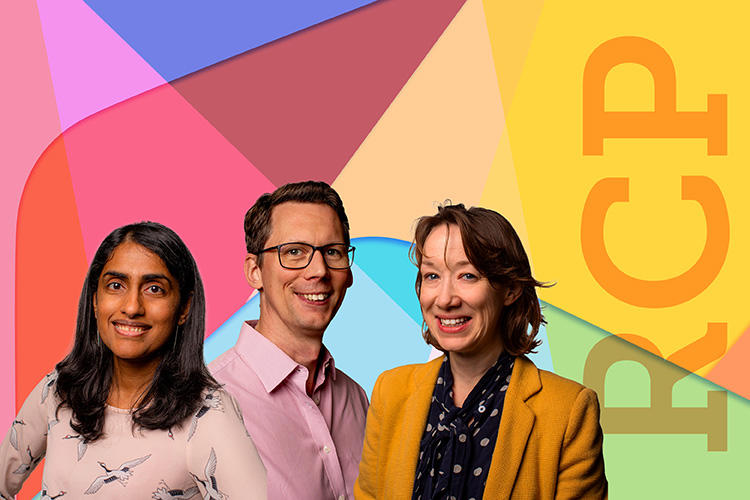
In my conversation with Dr Rohan Mehra for the RCP Medicine podcast, we explore health inequality across the life course, my research about the moral experience of clinicians, and why medicine must widen its understanding of professional competence.
We also talk about hope: communities already creating health differently and the Wellbeing and Health Action Movement, which grew from my attempts to remain in love with a profession that can make that difficult.
The question isn’t whether doctors can solve inequality alone – we cannot. Nor is this an argument for placing another impossible burden on an exhausted profession. It is an argument for seeing more clearly.
The doctor that this moment requires is still scientifically rigorous and technically excellent. But they must also be curious about context, humble about expertise, alert to power and able to work beyond professional silos. A good clinical decision is not good in the abstract; it has to be workable in a person’s life.
Alongside ‘what is the diagnosis?’, we must also ask: what has happened to this person, what conditions are sustaining their illness, whose knowledge am I missing and what is mine to do?
That is not mission creep; it is clinical excellence. And it is the work.
Listen to Dr Guddi Singh in the RCP medicine podcast to find out more about justice-based medicine and her work on reducing health inequalities.
Episode 110: What kind of doctor does this moment require?

Dr Guddi Singh
Social paediatrician, public health researcher and broadcaster