


























Following the success of the inaugural RCP Global Update in Medicine conference in Dubai in 2025, we looked forward to welcoming colleagues from across the Middle East, North Africa (MENA) and beyond to a face-to-face meeting on 1–3 May 2026. The programme had been developed, the faculty confirmed and preparations were well underway.
Then circumstances changed.
With geopolitical tensions evolving across the Gulf region in February 2026 and the uncertainty around how long they would last, it became clear that we needed to reconsider whether it would be appropriate and safe to proceed with the conference as planned.
For us, this was never simply a logistical exercise. It was an opportunity to demonstrate the RCP’s commitment to its members, fellows and healthcare professionals across the region. Rather than cancelling the conference, we were determined to ensure that physicians continued to have access to high-quality continuing professional development (CPD) at a time when education, collaboration and professional support were needed more than ever.
Planning and responding
After careful discussion, the RCP Global team made the decision to postpone the conference until 12–14 June 2026 and redesign it as a fully virtual meeting.
Over almost 4 weeks, an extraordinary collaborative effort unfolded. The conference chairs worked closely with the RCP Global team, conference organisers and technical partners to redesign every aspect of the meeting. Multiple virtual platforms were evaluated before selecting a provider capable of supporting a large-scale international educational conference. The scientific programme was adapted for online delivery while preserving the quality and interactive nature of the original meeting.
Weekly planning meetings became the backbone of the project. In addition to regular strategic discussions, numerous operational meetings focused on speaker coordination, technical rehearsals, delegate communication, sponsorship governance, risk management and contingency planning. Every aspect of the conference was reviewed to ensure that the virtual meeting reflected the standards expected of an RCP educational event.
Maintaining educational quality remained our highest priority. Wherever possible, faculty delivered their presentations live. When unavoidable scheduling or connectivity challenges arose, professionally recorded high-definition lectures were prepared in advance, with speakers joining live for questions and discussion. This ensured that delegates continued to benefit from direct interaction with international experts while safeguarding the continuity of the programme.
Equally important was maintaining the RCP’s governance standards. Our aim was simple: delegates should experience the same quality, professionalism and educational value that they would expect from any RCP conference, regardless of whether they attended in person or online.

While the transition to a fully virtual format was ultimately successful, the process was not without its challenges. These were anticipated as part of the rapid redesign process and provided valuable learning opportunities. The experience generated important insights that will inform the development of a conference quality framework, which will support planning and delivery of future conferences, including the 2027 programme.
Dr Mohamed Bakhit
Associate global director of the MENA region
Running the event
Looking back, the results exceeded our expectations.
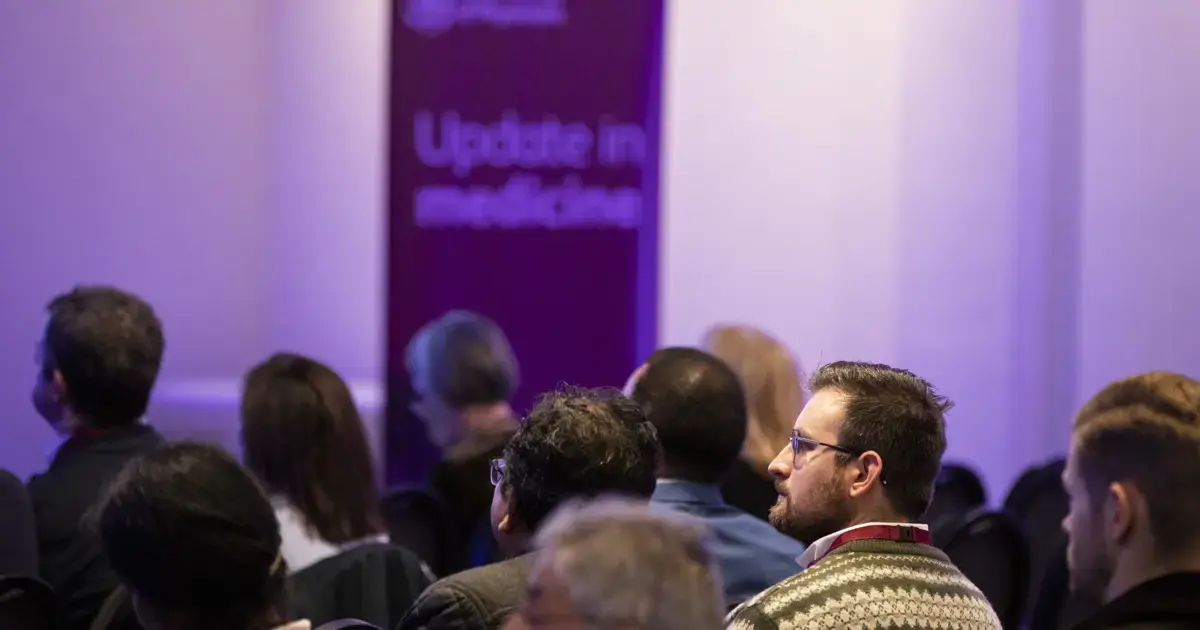
The conference attracted 6,969 registrations, with 4,582 healthcare professionals participating live from 19 countries. Across the 3 days, scientific sessions attracted more than 1,000 delegates on average, generating lively discussion and interaction between faculty and participants. More than 70 internationally recognised speakers contributed to a multidisciplinary programme covering gastroenterology, hepatology, cardiology, respiratory medicine, neurology, diabetes, obesity, rheumatology, AI, medical education and the responsible use of social media in healthcare.
One particularly successful innovation was the dedicated ‘Meet the RCP’ programme, which introduced delegates to the RCP’s educational opportunities, international activities and membership pathways. More than 3,800 delegates participated in these sessions, reflecting a growing appetite for ongoing engagement with the RCP beyond the conference itself.
The post-conference survey provided equally encouraging feedback. Delegates consistently praised the quality of the faculty, the relevance of the scientific programme and the seamless virtual experience. More than 90% of respondents rated the conference in the highest satisfaction categories, while many highlighted the practical nature of the sessions and the opportunity to interact with experts from around the world.
Importantly, delegates also shared thoughtful suggestions that will help to shape future RCP Global educational activities, including greater use of workshops, case-based discussions and hybrid learning formats.
What we can take forward
This experience reinforced several important lessons. Adaptability is now an essential component of international medical education. Strong leadership, careful planning and effective collaboration can transform unexpected challenges into opportunities. Most importantly, it demonstrated that meaningful international engagement does not depend solely on physical meetings. Technology, when thoughtfully applied, can extend educational opportunities to physicians who might otherwise be unable to participate.
The conference would not have been possible without the remarkable commitment of many individuals. We are deeply grateful to Dr Yanal Salam and Dr Adil Sajwani who led and managed the local logistics and faculty, and to the RCP Global team, particularly Dr Emma Vaux OBE, Aimee Protheroe and Dr Mohamed Bakhit, for their leadership and unwavering support throughout the planning process. We also thank our conference organisers, technical partners and – above all – our international faculty, who generously dedicated their time and expertise, often over a weekend, to deliver an outstanding educational programme.


Perhaps the greatest achievement of the conference was not simply its successful delivery, but the message that it conveyed. Even during periods of uncertainty, the RCP remains committed to supporting physicians through education, collaboration and professional development. By working together, we demonstrated that high-quality medical education can continue to thrive, despite changing circumstances.
Dr Laith Al-Rubaiy
Consultant gastroenterologist
As we look ahead, the experience has strengthened our ambition to expand the RCP Global programme further. Future plans include returning to a face-to-face meeting, while retaining the accessibility offered by virtual participation, expanding educational activities to new regions and exploring the establishment of a regional RCP Global hub to support year-round engagement across the Middle East.
The story of the second RCP Global Update in Medicine is ultimately one of resilience, partnership and shared purpose. Faced with significant challenges, we did not simply adapt. Together, we delivered an educational meeting that reached thousands of physicians, strengthened international collaboration and reaffirmed the RCP’s commitment to advancing excellence in medicine, wherever it is needed.
Planning for the 2027 RCP Global Update in medicine is already underway. If you would like to be involved, share an expression of interest or suggest ideas for the programme, please contact the RCP Global team at global@rcp.ac.uk or visit the RCP Global page.