













As winter approaches, RCP clinical lead for health inequalities and inclusion health Dr Pippa Medcalf shares why homelessness must be recognised as a health issue, and what the NHS can do to prevent people from falling deeper into crisis. On 26 October 2026, Pippa represented the medical royal colleges at a No10 government summit on ending rough sleeping, bringing the clinical voice into discussions about how we can better support people experiencing homelessness.
It is well recognised that people experiencing homelessness face significantly poorer health outcomes. People experiencing homelessness face markedly higher rates of physical illness, mental ill health and premature mortality than the wider population.
- Watch our video: Improving hospital care for people experiencing homelessness
- Read our Commentary article: A spotlight on health inequalities and homelessness
- Explore our guidance: Bridging the gap: making health inequalities a strategic priority for NHS leaders
- Download our policy paper: RCP view on health inequalities
As physicians, we see the consequences every day; people whose chronic conditions worsen because they are living in temporary accommodation, whose mental health deteriorates as housing insecurity grows, or who return repeatedly to hospital because they have nowhere safe to recover after discharge.
Many of the main drivers of homelessness may lie outside the remit of the health service. These drivers include a shortage of affordable housing, rising living costs, insecure employment, poverty and gaps in the social safety net. Relationship breakdown, domestic abuse, poor mental health, addiction and adverse childhood experiences can add further layers of vulnerability.
However, healthcare settings and professionals are uniquely placed to provide support and interventions. The causes are structural, but significant opportunities to address these vulnerabilities exist within healthcare settings.
The NHS may not be able to solve homelessness, but it can often prevent people from falling deeper into crisis, reduce the health inequalities associated with homelessness and improve outcomes for some of the most vulnerable people in society. At a time when services are under significant pressure, recognising homelessness as a health issue is essential if we are serious about improving patient outcomes, reducing avoidable admissions and supporting safe discharge from hospital.
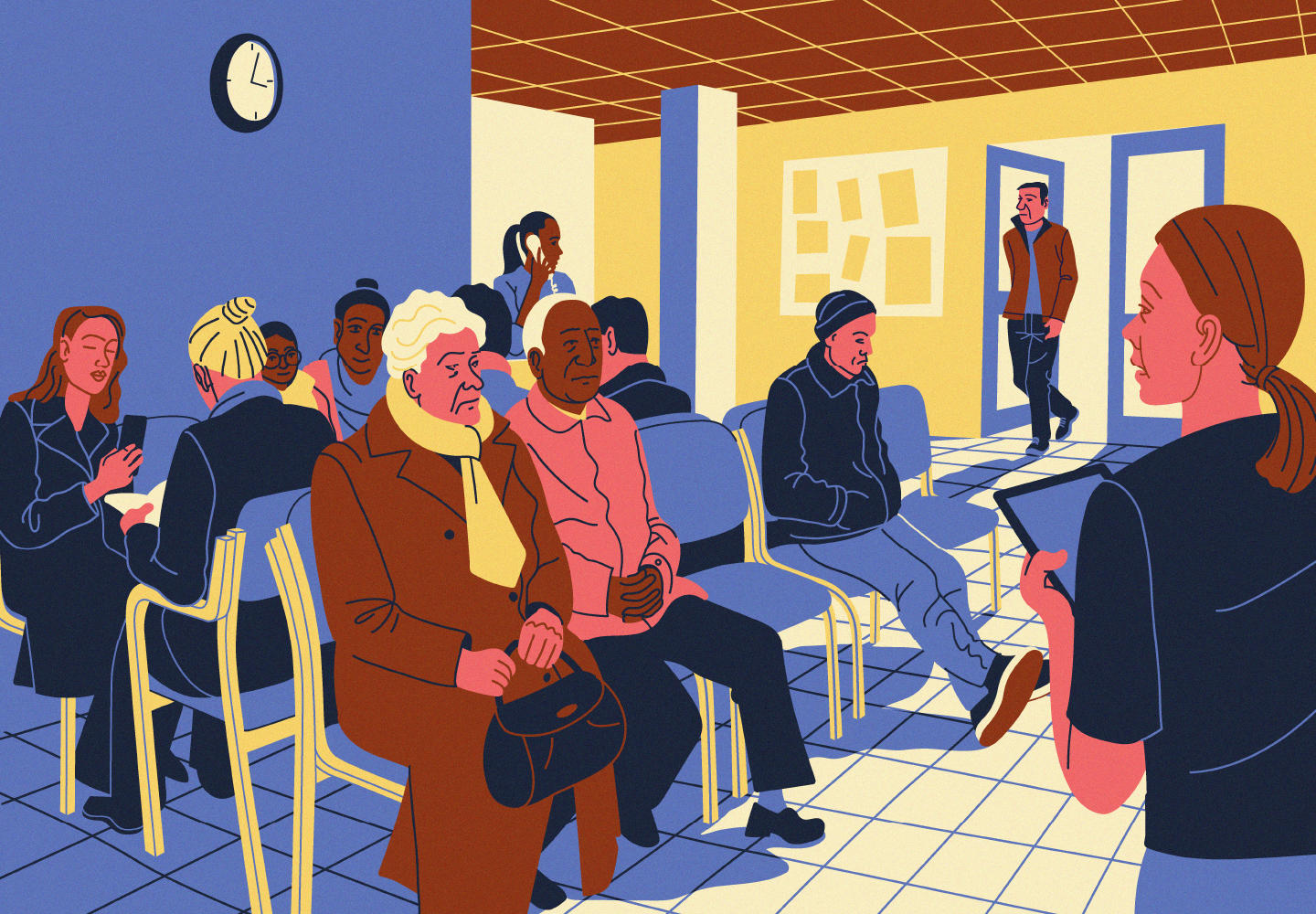
Image: Mike Stonelake at NB Illustrations
Where the NHS comes in
In England, the Homelessness Reduction Act 2017 places a duty on specified public bodies, including NHS services, to refer people who are homeless or at risk of homelessness to local housing authorities. This reflects the fact that healthcare professionals are often well placed to identify the signs of housing insecurity and help prevent people from falling deeper into crisis.
In some areas, discharge-to-assess models and dedicated housing coordinators can help to ensure that patients are not discharged into unsafe accommodation and that they have access to appropriate support. This is not simply about meeting a statutory obligation. Effective discharge planning can reduce the risk of patients returning to hospital because their housing needs have gone unmet and help ensure that recovery is not undermined by a lack of safe accommodation.
Beyond crisis intervention, the NHS can also help to address some of the health factors that increase the risk of homelessness. Outreach services, including mobile clinics and homelessness health teams, can also improve access to care for people who may struggle to engage with traditional healthcare settings.
This is prevention in practice. Early identification, coordinated support and access to healthcare can help stop health problems and housing challenges from escalating into crisis.
What is best practice?
There are examples of good practice across the NHS that demonstrate what is possible when housing is recognised as a health issue.
In some areas, discharge planning begins early and involves housing teams alongside health and social care professionals. Dedicated homelessness practitioners, housing officers and inclusion health teams help to ensure that patients are not discharged into unsafe situations. Community and outreach services bring healthcare directly to people who struggle to access traditional services, while specialist mental health and addiction support can help to address factors that frequently contribute to tenancy breakdown and repeat homelessness.
Unfortunately, these services are still not available consistently across the country. Access to housing support within healthcare can depend on where a patient lives, rather than what they need.
People experiencing homelessness face some of the worst health outcomes in our society, yet access to support within healthcare settings remains inconsistent. Services should not depend on local arrangements or individual champions alone, and there is growing recognition across government of the need to address homelessness and its impacts.
Today, I represented the medical royal colleges at a No10 government summit on ending rough sleeping. I highlighted the important role that the NHS can play in supporting wider efforts to end rough sleeping and improve outcomes for people experiencing homelessness and housing insecurity. While the NHS cannot solve homelessness alone, physicians are well placed to identify when someone is at risk, intervene before problems escalate and ensure that people receive appropriate support.
Housing should be recognised as a key determinant of health, and support for people experiencing homelessness should be embedded within the design and delivery of health services. While homelessness is shaped by factors that extend well beyond the health service, its consequences are seen every day in healthcare settings.
Dr Pippa Medcalf
RCP clinical lead for health inequalities and inclusion health
For physicians, homelessness is not a distant social issue. It is a reality that affects patients' health, their ability to access care and their chances of recovery. Early identification, effective discharge planning, targeted clinical support and partnership working mean that the NHS can make an important contribution to preventing homelessness, mitigating its health impacts and improving outcomes for some of the most vulnerable people in society.
The NHS cannot solve the housing crisis, but it can play a vital role in preventing people from falling deeper into crisis. Recognising housing as a determinant of health, embedding support for people experiencing homelessness within care pathways and ensuring safe discharge should be a routine part of delivering equitable healthcare.
As the RCP continues to champion prevention, neighbourhood health and action on health inequalities, support for people experiencing homelessness must be recognised as a core component of high-quality care. The discussions at today’s No10 government summit are an important opportunity to recognise the contribution that healthcare can make as part of wider efforts to end rough sleeping. This is not simply about responding to crisis. It is about improving health outcomes, preventing avoidable harm and ensuring that some of the most vulnerable people in society are not left behind.