








Welcome to autumn or, as John Keats put it, ‘Season of mists and mellow fruitfulness’. First published in 1820, his poem has stood the test of time – unlike his brief career as a medical student at Guy’s Hospital, London.
This legacy is similar to Commentary, which had its first iteration as a short insert to the snazzily entitled Journal of the Royal College of Physicians of London (JRCPL). 1966 was an auspicious year in some respects (England winning the World Cup, the start of the Cultural Revolution in China and the television premiere of Star Trek as an eclectic mixture), but most of the themes in the early editions of JRCPL will resonate: ‘A commentary on the whole medical scene ... an opportunity to derive theory from fact and to judge the value of techniques in the service of patients.'
Professor Anita Simonds, our Harveian librarian, has been through the archive and gives an overview of what (if anything) has changed since 1966 in her article in this edition – plus ça change, plus c’est la même chose. I will leave you to judge what progress has looked like.
One thing that has stood the test of time is that medicine gives you options and a variety of transferable skills. It was great to chat to Dr Lewis Jones, team medic for the England women’s national rugby team; he combines being in training camps and matches with his day job as an emergency department consultant.
Dr Guddi Singh asks the recurring rhetorical question: 'What sort of doctor does this moment require?’. This piece – and the accompanying podcast reminds everyone that nothing occurs in a vacuum, and we all need an understanding of the world that makes our patients ill.
While pregnancy is not defined as an illness, we know that pregnancy with pre-existing medical conditions carries defined risks. The data are striking and underpinned the Diploma in Obstetric Medicine. Now 5 years on, with a cohort undertaking sessions within their consultant jobs, the diploma provides invaluable medical information, as explored by RCP clinical education fellow Dr Alice Cole.
The world has become more accessible since 1966, even if only virtually. When events overtake the best-laid plans for a face-to-face meeting, we have the ability to move online – albeit with an enormous amount of upheaval. The work that has been done on the second Global Update in medicine is a great example of this put into practice. The technology that we have may not be as fanciful as the science fiction in 1966’s Star Trek, but it facilitates collaboration, global education and links beyond the UK for the RCP.
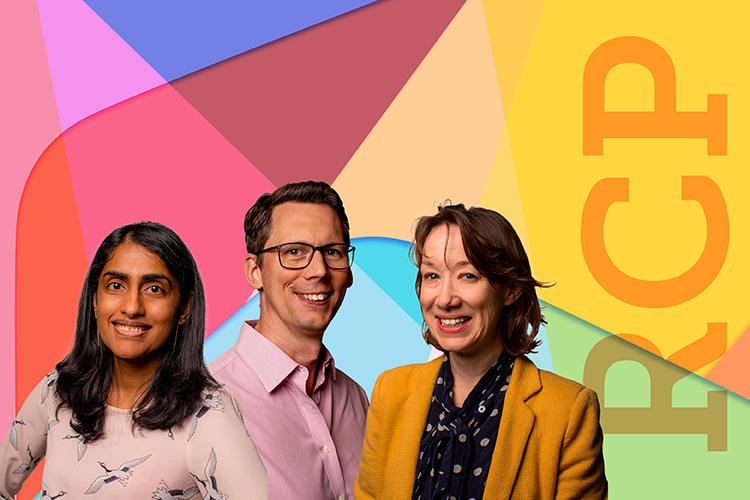
Professor Ollie Minton
Clinical editor, Commentary