



























In February, the RCP hosted a roundtable on how to improve end-of-life care in acute hospitals, bringing together over 40 physicians from a variety of specialties.
Acute hospital admissions are common towards the end of life. In 2025, 290,000 patients admitted to acute medical settings died during, or within 30 days of, admission, while data from 2024 show that over 68% of people who died experienced at least one emergency admission in their last 3 months.
There is growing concern about the quality of end-of-life care in acute care settings as the use of temporary care environments increases, palliative care capacity is stretched and hospice funding is under strain.
For many patients approaching the end of life, acute hospital admissions are unavoidable. Hospitals must therefore be prepared to deliver good quality end-of-life care, in safe settings that are prepared to deliver that care.
Roundtable
The discussions focused on what defines ‘good quality’ end-of-life care, and the barriers that prevent it from being delivered. Participants identified priority issues and practical recommendations, which will shape future RCP policy and work.
Physicians from specialties including palliative medicine, acute medicine and geriatrics listened to short talks from experts, including:
- Professor Paul Paes, vice president of the Association for Palliative Medicine
- Dr Vicky Price, president of the Society for Acute Medicine
- Dr Louise Robinson and Dr Antonia Field-Smith, palliative care consultants and authors of the RCP Uncertain recovery guide
- Professor Jugdeep Dhesi, consultant geriatrician in a perioperative medicine for older people undergoing surgery (POPS) service and president of the British Geriatrics Society
- Dr Zuzanna Sawicka, RCP clinical director for patient safety and clinical standards.

Breakout sessions focused on key barriers such as a lack of space or planning, to a cultural reluctance to have clear conversations with patients.
Participants felt that the RCP had an important role to play in creating and influencing training, standards and policy on end-of-life care that was consistent across specialties.

We met as 40 expert physicians from Northumberland to Brighton, from Derby and Wales. We heard from cardiologists, hepatologists, oncologists, acute medics and resident doctors all really committed to getting care right for people towards the end of life.
Everyday we encounter people in the last stages of life and recognising when recovery is uncertain, when dying is approaching really matters. Despite an incredible range of medical innovations sometimes we have to step back from the noise. The most valuable thing we can do is stand still and care.
Dr Hilary Williams
Clinical vice president and roundtable participant
What does ‘good’ look like?
‘Death is inevitable, but dying badly, without dignity or preferences respected, should never be acceptable,’ writes Dr Kathryn Mannix in her recent FHJ editorial.
The roundtable discussed what it means to provide good quality end-of-life care in acute hospitals. Deaths in hospitals are inevitable; while advanced care planning and community-based care reduce it, 43% of the 650,000 UK annual deaths occur in hospitals.
The participants identified areas of good practice:
- Honest and timely conversations: Earlier conversations mean that patients and families can be prepared, express preferences and create clear plans about their treatment.
- Individualised planning: End-of-life care is a very personal experience. Patients and families should be included in planning – which may deviate from protocol.
- Joined-up care: Different specialties must work together, sharing clear information to ease the experience of end-of-life patients.
- Good settings: Patients should have access to single rooms; they should not be dying on wards or in temporary care settings.
- Good staffing levels: There should be consistent provision of care, including specialist palliative care.
Uncertain recovery
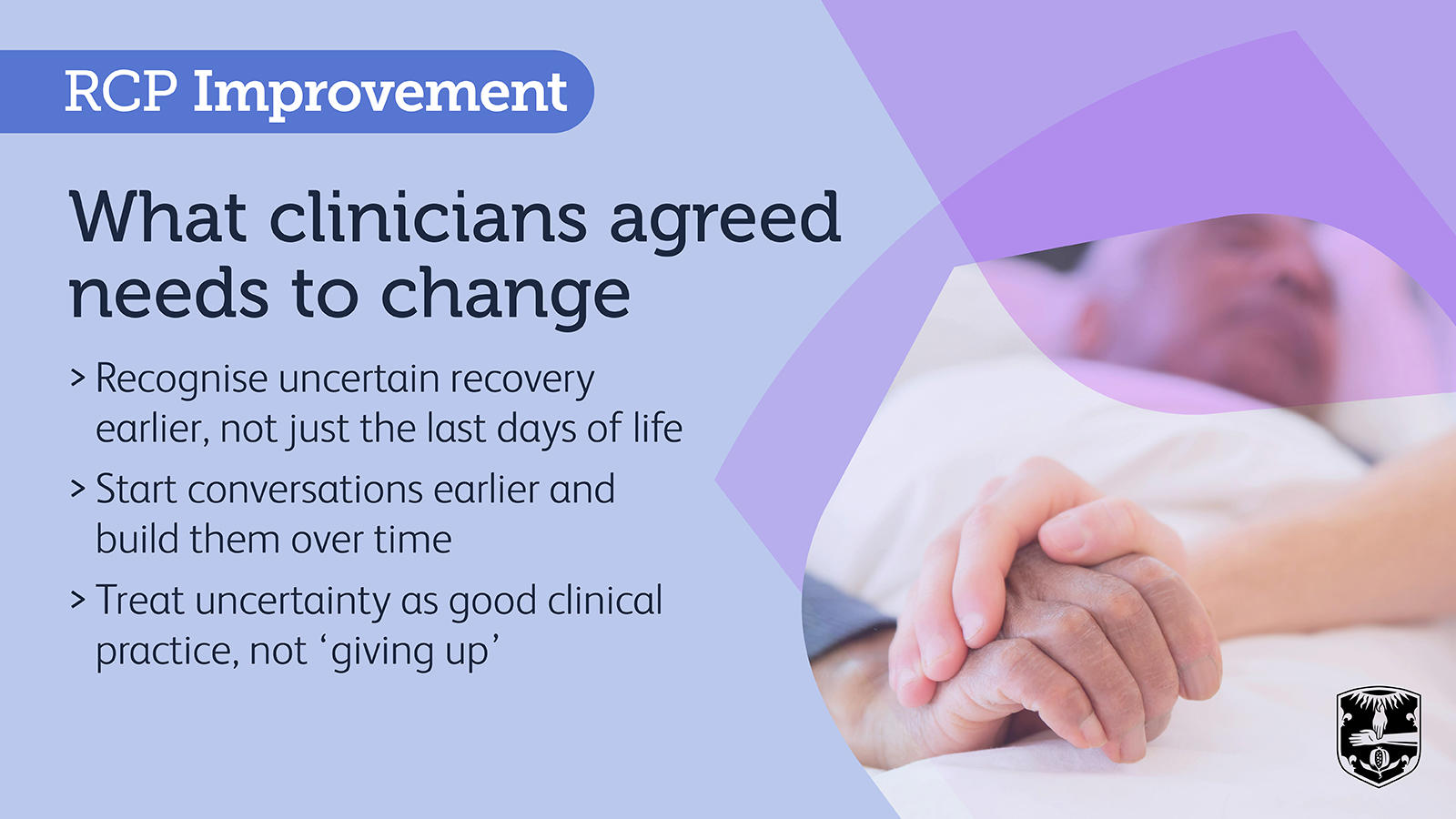
The roundtable explored the ‘uncertain recovery’ framework which should be adopted by all specialties. Speaking early about uncertain recovery can be a more honest approach which is less threatening for patients and families.
This approach can happen earlier in treatment than an end-of-life discussion and enables parallel planning; hoping for recovery and continuing treatment, while acknowledging risk of death. It gives patients more time to have gentle, iterative conversations about end-of-life plans. It also takes the pressure off physicians, who may feel like having one ‘end-of-life discussion’ is final and indicates giving up treatment.
You can read more about this approach in the RCP’s Uncertain recovery communication guide.
The barriers to ‘good’
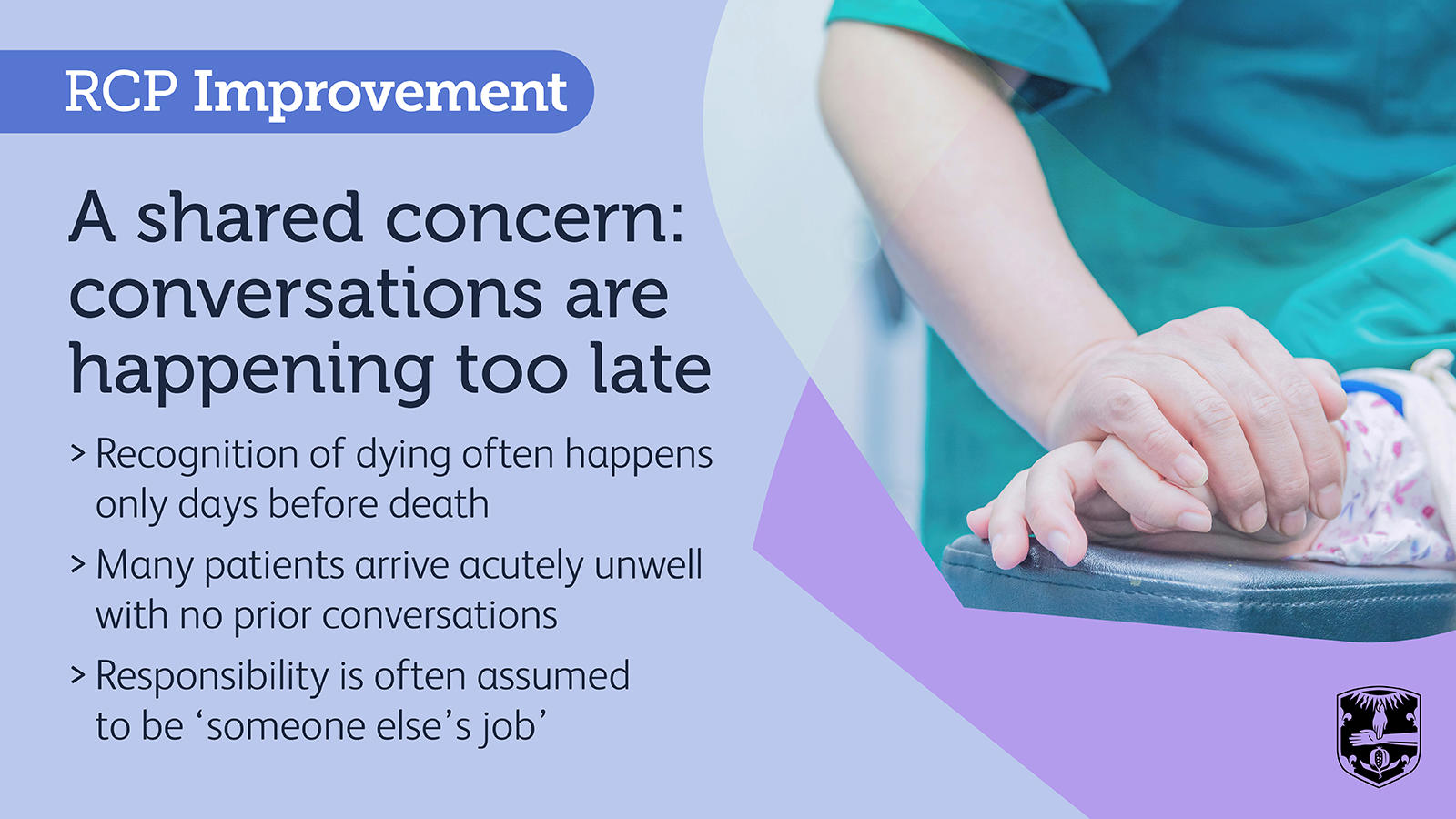
The roundtable participants discussed the system pressures preventing good-quality end-of-life care in hospitals; temporary care environments and ongoing workforce pressures add strain for all specialties, making it particularly hard to have sensitive end-of-life discussions.
The NHS ‘flow culture’, with patients moving through the system as quickly as possible, is often antithetical to gentle end-of-life care. Many NHS metrics equate mortality with failure, which can discourage realistic decisions; the things that matter to patients approaching the end of their life are rarely measured in metrics.
To tackle this, the roundtable called for end-of-life care to be included earlier in training and a wider cultural reframing of death. Other steps could include universal treatment escalation plan (TEP) adoption, improved national metrics and recognising advanced care planning as clinical activity.
Alongside this, there are cultural habits and missed opportunities which make it harder to provide good end-of-life care in hospitals. Many doctors outside of palliative care lack confidence in dealing with dying, but good end-of-life care is an approach which all specialties can use. Clinicians can feel like they are ‘giving up’ by initiating an end-of-life conversation; recognising mortality can be incredibly difficult. Physicians worry about causing distress or giving bad news too early, and every patient is different and end-of-life care often closely involves family, and personal or religious beliefs.
Non-palliative specialities are often better placed to start end-of-life discussions; oncologists, acute physicians or anyone managing a chronic progressive condition can identify uncertain recovery. Delaying that conversation is a missed opportunity that can cause more long-term distress.
End-of-life patients with multiple health conditions can become lost between teams, receive futile but distressing treatments or end up in ‘referral ping-pong’ in their last few months if there are not joined-up services and shared information, including a clear end-of-life plan.
Palliative care funding and staffing vary across trusts, so other physicians not dealing with death can create geographical inequalities in end-of-life care, particularly prevalent in economically deprived areas.
The roundtable agreed that death is the responsibility of all physicians; accessible advanced care plans for end-of-life patients, and good cross-specialty end-of-life education and support is essential. It also suggested creating cross-specialty guidance and scripts, particularly around patient’s cultural or religious considerations, could be a useful tool for physicians.
Next steps

We know all our services are dependent on established relationships and referral systems which further risk being disrupted in a stretched system. The data presented at the roundtable illustrates how little progress has been made over many years. We know cancer treatment is constantly improving – however, we need to ensure that palliative care and associated supportive services are still introduced in a timely manner and funded to ensure a good death. That is also paramount within the new cancer plan.
Professor Ollie Minton
Commentary clinical editor and roundtable participant
The findings from the roundtable have been submitted to inform the planned new MSF for palliative care which is due to release in autumn 2026. The RCP will continue to work to support physicians in this area, including talking to key stakeholders about how the role of acute hospitals is better acknowledged and understood.
If you have experiences of working in this area, you can contact comms@rcp.ac.uk. We also ask doctors working in acute settings to participate in the CURVE study to help improve communication about uncertain recovery by filling in a 10–15-minute anonymous survey by the University of Cambridge.
