



























Since the last edition of Commentary in October, the RCP has been working to represent our members and support the work of physicians. Read our summary of the news from the last 2 months and the upcoming opportunities – and what to look forward to in 2026.
A clear mandate for change: RCP fellows vote to extend voting rights to collegiate members
In October 2025, RCP fellows voted in favour of extending voting rights to collegiate members in elections for councillors and vice presidents. An even higher percentage of voters also supported the RCP exploring legislative change to extend voting rights for the election of the president.
Following the RCP annual general meeting (AGM) in September, an online ballot was open to all eligible fellows. It closed at 5pm on 10 October, with a turnout of 29.6% (4,714 valid votes).
More than three-quarters (75.5%) of fellows said that the RCP should explore amending the Medical Act 1860 to remove restrictions and extend voting rights for the election of the president.
The results empower the RCP to update its bye-laws immediately and allow collegiate members – many of them resident doctors – to vote in elections for vice presidents and councillors, giving them a democratic voice in the leadership of their college for the first time in over 500 years.
RCP Council and the Board of Trustees will now explore next steps on widening the vote in presidential elections, which requires legislative change.
You can read more about the results on the RCP website.

Council meetings move to being more open for members
September saw a change in the way that RCP Council is run, with meeting proceedings opening up to the full membership. Meetings are now organised with an open and closed section, with agendas, meeting summaries and minutes shared on the website.
Council is the key RCP committee that considers and acts on current issues affecting the medical profession, meeting six times a year to shape policy positions, professional practice and standards. The Medical Specialties Board – which brings together representatives of the 30 plus physician specialties – reports directly to Council, while other committees share updates with Council to inform key topics.
Chaired by the RCP president, Council’s membership includes senior college officers, directly elected councillors and other representatives involved in the college’s work including specialist society and faculty leaders. From September, agendas will be publicised prior to each meeting, summaries will be uploaded to the website within 10 working days and minutes will be shared there once approved.
Members will be more actively encouraged to shape agendas through representative networks such as regional advisers, college tutors and committees. There will also be the opportunity from the new year to request observation status at the meetings via the registrar (registrar@rcp.ac.uk).
This new move is aimed at encouraging more openness and transparency and proactively encouraging the membership to get their voice heard on the issues that matter most at this key policy shaping forum. It also means that the ‘Faith’, an RCP bye-law around confidentiality that all Council members sign up to before their first meeting, will only apply to the closed section of the meetings to protect discussions around sensitive fellowship, confidential, financial or commercial subjects.
You can find information about Council meetings, Council membership, forward meeting dates and associated papers behind the RCP membership login at the RCP website.
RCP governance matters
Read the latest updates on RCP governance matters and find your opportunities to get involved.
As required by section 6 of the Medical Act 1860, the election of the president will be held on Monday 30 March 2026.
Please note that Council supports an uncontested presidential election in 2026 recommending that Professor Mumtaz Patel be nominated, to continue to serve as president with the expectation that her term of office is 4 years, ending in September 2029. Professor Patel has indicated her willingness to stand for re-election.
Please read the statement from Council in support of her candidature, available on the election section of the RCP website along with a nomination form. Only those fellows who have been nominated previously are eligible for election.
College Day will also include the FitzPatrick and Samuel Gee lectures (both available online and on-demand), plus an opportunity for fellows to book for dinner.
New arrangements have been introduced to improve the transparency of Council. A dedicated section of the website explains further and you can read the most recent Council meeting summary online: ‘We are moving in the right direction’: November 2025.
The full minutes of the September Council (open section) have now been uploaded to the Council section of the website.
Our officer, committee and other clinical volunteer roles are an ideal opportunity to support the RCP, guide our decision-making and ensure the voice of the membership is included across all activity. Visit the RCP website to see the latest opportunities.
The recent vote of fellows saw over 75% support a (non-binding) proposal for the RCP to explore amending the Medical Act 1860 and the RCP royal charter. The Board of Trustees and Council will now consider this further.
GGi have completed the interview stages of their external governance review focusing on the effectiveness of the board and trustees, the relationship with RCP Council, governance structures, and strategic alignment of the Board and Council. Their recommendations and full report will be presented to the Board and Council in due course.
Recent RCP work
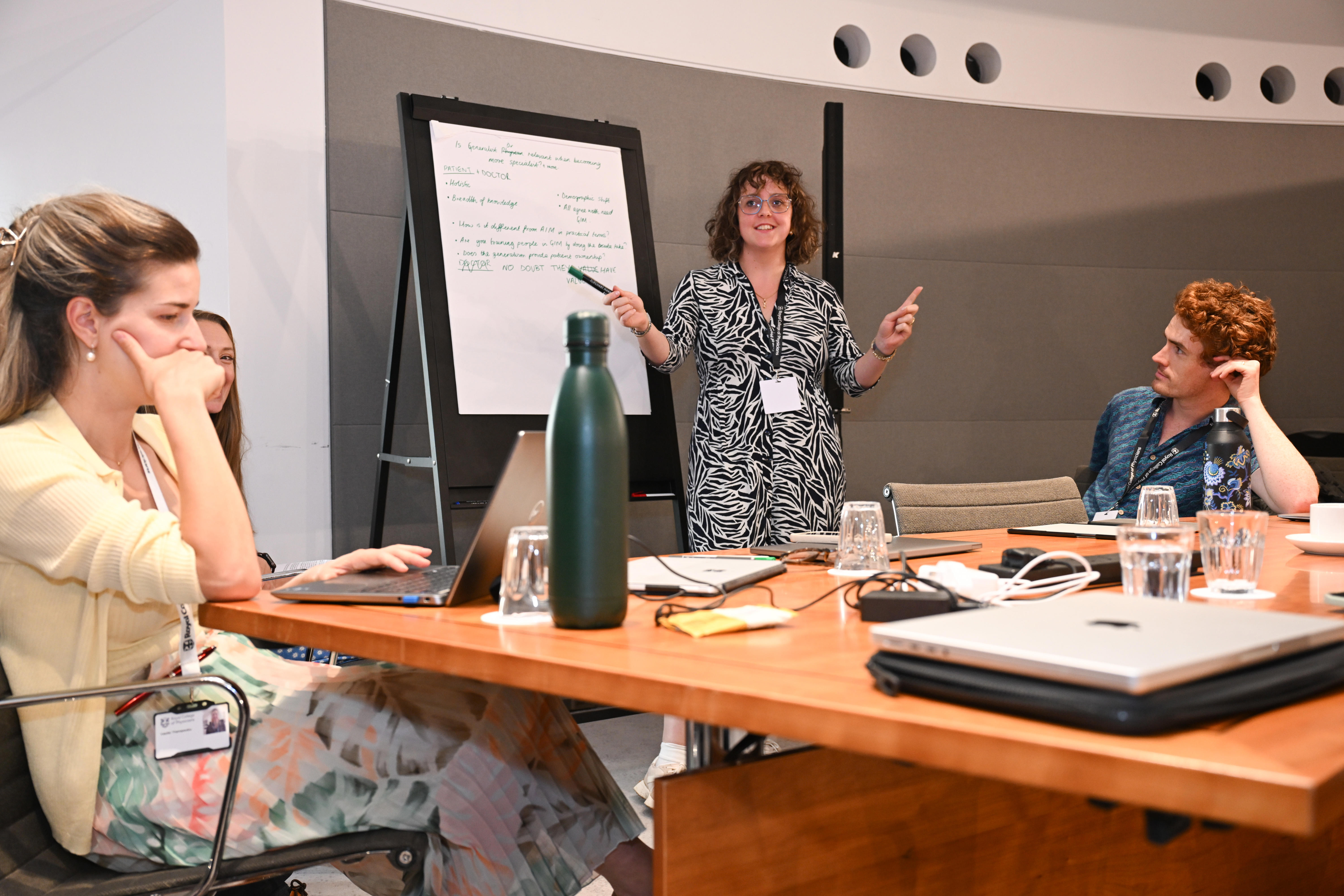
Read more about our work, from publications, award winners and responses to healthcare reports, on our News and opinion page – and see some of the recent highlights below.
The RCP has thanked members, fellows and staff across the UK and internationally for their input into the development of its new strategy, due to launch in 2026.
Over the past 6 months, thousands of physicians have shared their views through surveys, focus groups, regional visits and committee discussions, helping to shape the college’s direction for the years ahead. The RCP’s next strategy will build on the achievements of recent years, while responding to a rapidly changing health and care landscape.
‘We are extremely grateful to everyone who has contributed to these conversations so far,’ said RCP president Professor Mumtaz Patel. ‘Your insights, experiences and ideas are vital in shaping a strategy that truly reflects our members’ priorities and the realities of modern medicine. We want this strategy to be rooted in the values of our community – collegiate, evidence-based and forward-looking.’
Over the summer, the college consulted internally with hundreds of RCP Council, committee, network and advisory group members. Our online all-member survey of 40,000 fellows and members closed on 12 November and will directly inform the first draft of the strategy, which will be shared with Council and key RCP committees over the winter.
Early feedback has highlighted the importance of education, voice and community as the college’s enduring strengths. Members have called for the RCP to continue setting high standards in education and training, to be a strong and influential voice for physicians and patients, and to foster a more connected professional community – across career stages, specialties and nations.
Physicians have also emphasised key challenges that the strategy must address, including workforce pressures, wellbeing, digital transformation, the growing importance of generalist medicine, and the need to value diversity and inclusion in every aspect of college life.
‘The next strategy is about strengthening the RCP’s role as a modern, diverse and inclusive college,’ added Mumtazl. ‘We want to support physicians to deliver excellent care, wherever they work. We will continue listening as we refine our vision and priorities over the coming months.’
The new strategy will be launched in spring 2026.
Fellows and members can stay involved by attending upcoming Meet the president events, responding to our membership surveys or sharing ideas directly with comms@rcp.ac.uk.
The RCP has hosted its first global Meet your president conversation, bringing together fellows, members and international advisers from across the world to share ideas, ask questions and shape the future direction of the RCP.
Professor Mumtaz Patel, RCP president, stated: ‘We are here to support you. We want to build meaningful connections, amplify your voice and work together to modernise the RCP while respecting our heritage. As we develop our new strategy, our focus is clear: we will support physicians worldwide, champion excellence in healthcare and ensure that the RCP reflects the diversity and passion of our global membership.’
Find out more about the event and future events on the RCP website.

The RCP has worked closely with fellows and members to shape our response to the NHS England 10 Year Workforce Plan (10YWP).
Through focus groups, surveys, regional visits, webinars and committee discussions, we’ve gathered first-hand insights from doctors at every stage of their careers to ensure the physician voice is front and centre of national workforce planning.
We’ve engaged directly with over 200 fellows and members in the past 6 weeks, running four facilitated focus groups with RCP Council and committee members and sending out an all-member survey asking for case studies and examples of good practice on the ‘three shifts’.
When the 10YWP was first announced, members told us they welcomed a long-term approach – but that the plan needed to go further on postgraduate training reform, retention and the balance between service and education. Since then, hundreds of physicians have contributed their views through our 'Focus on physicians' survey, the next generation of physicians campaign, and trust visits led by our president, Professor Mumtaz Patel.
Doctors have shared powerful testimony about what’s driving workforce pressures: rota gaps, corridor care, lack of supervision time and unsustainable workloads. Consultants have told us they are worried about early retirement and the loss of experienced educators. Resident doctors have described bottlenecks, burnout and limited flexibility in training. SAS and locally employed doctors have highlighted the need for clear progression routes and equitable access to development opportunities. These conversations have directly informed our recommendations to government and NHS England. We’ve called for the government to:
- invest in the medical workforce to deliver excellent patient care, with sufficient funding, infrastructure, and support for educators, supervisors and trainers
- expand medical education and training capacity, including a clear, costed plan to increase medical school and specialty training places in line with independently verified workforce modelling
- reform postgraduate medical training to ensure fair, flexible and sustainable pathways that reduce competition ratios and strengthen generalist and specialist skills
- engage meaningfully with doctors and royal colleges in the design, testing and implementation of the 10YWP, ensuring that assumptions are realistic and the workforce is fully involved
- deliver a transparent, regularly refreshed and evidence-based implementation plan that incorporates National Audit Office recommendations, recognises system capacity limits, and revises unrealistic physician assistant expansion targets.
Our response reflects what members have told us matters most: creating the conditions for excellent patient care by supporting the people who deliver it. Thank you to every member and fellow who has shared their experiences and ideas.
Your insights continue to shape how we advocate for a workforce plan that truly works for physicians – and for patients.
RCP president Professor Mumtaz Patel received the President's Award for Professional Excellence at this year’s British Association of Physicians of Indian Origin (BAPIO) conference at the end of November.
Upon receiving the award, she said:
‘I am honoured to receive the BAPIO President’s Award for Professional Excellence. As a community, physicians of Indian origin have made a profound contribution to the NHS and I am proud to be part of that tradition. This award reflects the support of colleagues and mentors throughout my career. I hope this award inspires others in our community to continue striving for excellence in patient care, medical leadership and innovation.’
She discusses the award in her Commentary opening column for December 2025.
The RCP has published the full results of its national next generation survey, revealing widespread burnout, frustration and disillusionment among resident doctors across the UK.
Drawing on responses from over 1,000 resident doctors, the survey paints a stark picture of postgraduate medical training under pressure. Only one in four (26%) feel ready for the next step in their career, and fewer than one in five (17%) believe recruitment processes are fair. Most (72%) say insufficient staffing and rota gaps have the greatest negative impact on their training and wellbeing, followed by heavy workloads (66%) and poor IT systems (59%).
The findings were published a week before the NHS England medical training review diagnostic report in October. The RCP warns that without urgent action to improve training structures and working conditions, the NHS risks losing a generation of talented doctors who feel ‘undervalued, exhausted and unable to develop the skills needed for safe consultant practice.’
Resident doctors described a culture where service delivery consistently outweighs education. ‘It feels like a constant battle just to get any meaningful training,’ said one respondent. ‘I don’t feel like I’m progressing – I’m just a number on a rota.’
‘Operational fixes alone are not enough,’ explained Dr Hatty Douthwaite, former deputy chair of the RCP Resident Doctor Committee (RDC). ‘Resident doctors have been clear about what is broken – unfair recruitment, relentless workloads and a system that too often sidelines their learning.’
The RCP’s next generation campaign sets out ten priorities for reform, including fair and transparent recruitment, flexible rotations, guaranteed protected learning time and national standards for supervision. It also calls for better digital and leadership training, safer workplaces and long-term workforce planning to expand medical training places.
Reflecting on the survey results, Dr Catherine Rowan and Dr Stephen Joseph, co-chairs of the RDC, said, ‘postgraduate training must urgently adapt if we are to train and retain the next generation of physicians. The review offers a once-in-a-generation opportunity to get this right.’
Read our follow-up think piece from Dr Hatty Douthwaite or more about the RCP next generation campaign – including a Commentary feature.

RCP events and upcoming opportunities
Learn more about our conferences, competitions and opportunities for publications.
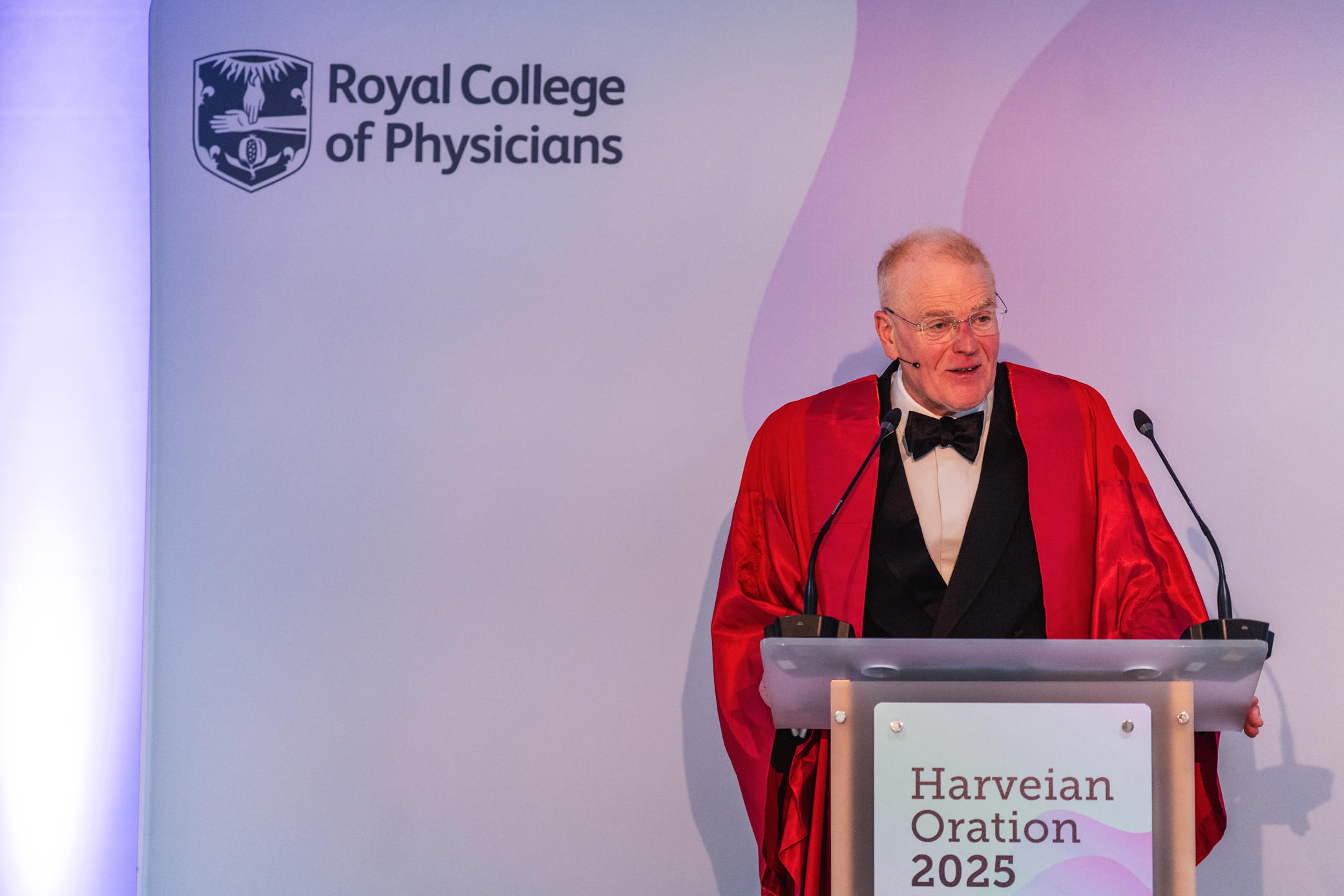
The RCP has hosted the Harveian Oration since 1656. This year’s event brought together over 200 fellows and members in person and online to celebrate the significant advancements made in nephrology in the last 75 years.
For centuries this annual event has recognised outstanding contributions to healthcare and encouraged scholarly exchange among the medical profession.
Hosted at the RCP’s northern home at The Spine in Liverpool, the 2025 Harveian Oration was delivered by Professor John Feehally, who explained the evolution of nephrology over the past century.
The 2025 Harveian Oration is now available to watch on demand on RCP Player. Read more about the event online.
We’re delighted to announce the return of the Excellence in Patient Care Awards in 2026. These awards celebrate the outstanding work of RCP members and fellows who are driving improvements in patient care across the UK and internationally.
Applications open on 5 January 2026.
If you’ve led a project that has made a real difference to patients, this is your opportunity to celebrate your work. View 2025’s winners and finalists and get inspired.
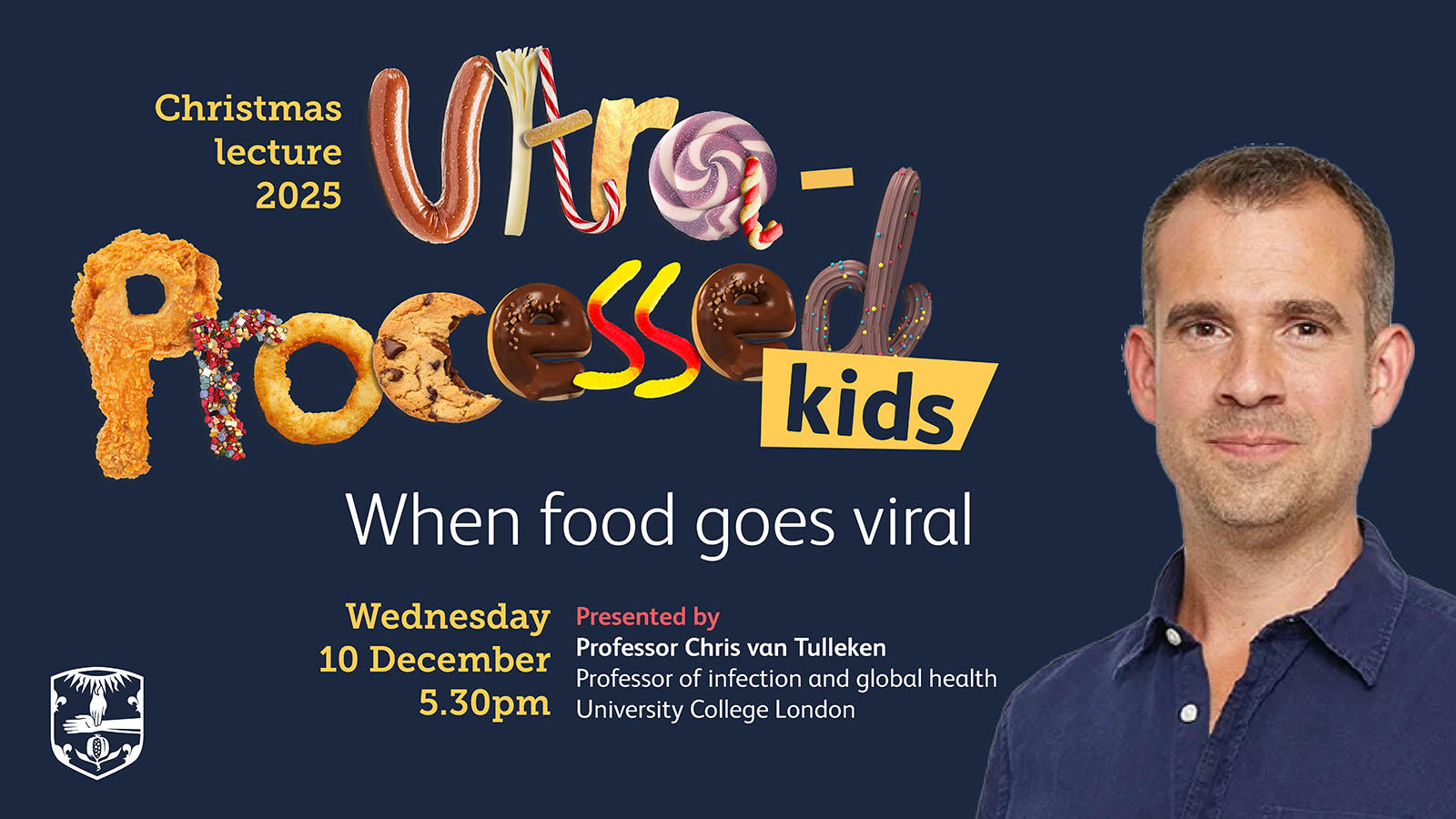
The RCP Christmas lecture will take place on 10 December 2025.
This year, we are delighted to welcome back Professor Chris van Tulleken who is a professor of infection and global health at University College London.
Chris is also known for his work on the BBC, where he hosts the BAFTA award-winning series Operation Ouch! with his brother, Xand.
The lecture, designed for 12–18-year-olds, will explore the most important project of all life on earth – eating.
Chris will tour the gastrointestinal tract and show how we use food to build our bodies, and to fuel our movement as well as our thoughts. He will highlight how food sustains us, but also how the modern food environment can be harmful and what young people can do about it.
After the talks, in-person attendees are invited to join us for a festive get together.
Adult tickets are £20 – all children can attend free of charge.
This is a hybrid event, so that you can attend online.
Up to 12 grants of £500 each are available each year to undergraduate medical students at UK universities who will be undertaking a medical elective overseas.
Applications are currently open to RCP members.
Download the application form and email your application to fundingandawards@rcp.ac.uk. The deadline for applications is Saturday 28 February 2026.
Find out more on the RCP website.
Applications are invited from consultants and specialist registrars for the next Dame Sheila Sherlock fellowships in hepatology. These bursaries have been offered by Dr Geraint James in memory of his wife, Dame Sheila Sherlock.
Their purpose is to offer consultants and specialist registrars the opportunity to learn new techniques and acquire new experiences, ideas and stimulation through travel and the exchange of ideas.
Two travelling fellowships are available to RCP members and fellows, and will be offered to one consultant and one resident doctor. Each fellowship will be for a maximum of £2,000.
Please send in your application by Saturday 31 January 2026.
Find out more about how to apply online.
Clinical Medicine is among the top 15% of general medical publications worldwide. By publishing open access with Clinical Medicine, you can:
- expand your reach
- amplify your visibility
- connect with collaborators across the globe
- contribute to high-quality educational resources supporting clinical practice.
As an RCP member you can publish in the journal for free. That’s a saving of up to £1,850 per article (depending on exchange rate).
Join our many members who have published original research for free, including RCP fellow Professor Trisha Greenhalgh, who told us how the fee waiver has benefited her:
‘Clinical Medicine processed our paper promptly and we were delighted to discover that we were exempt from the publication fee because we were members and fellows of the RCP. This was a significant benefit at a time when our grant had run dry. The paper has been highly accessed and widely cited.’

Deceased fellows
Munk’s Roll is the RCP’s collection of biographies of deceased fellows, published online as Inspiring Physicians. To write an obituary or notify the RCP of the death of a fellow, email munksroll@rcp.ac.uk.
Here are the deaths reported covering the period 3 October 2025 – 7 December 2025:
- Michael Charles Winterton
- William NicholasTrethowan
- Colin Garton Geary
- Thomas Darsie Goode
- John Roderick Bennett
- Timothy Clive Marrs
- Graham Owen Hopkins
