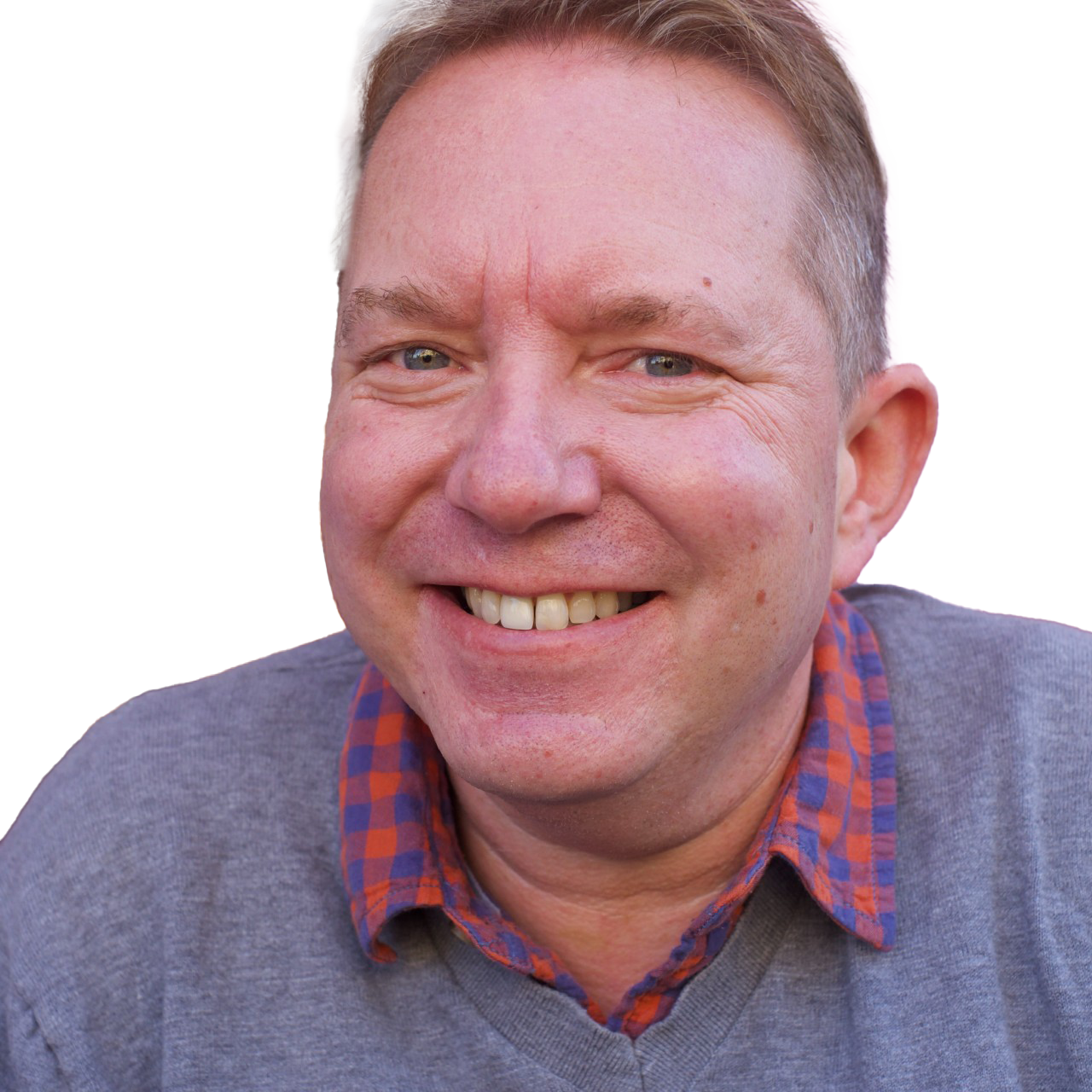

























Professor Samuel Rice [image right] and Dr Ben Thomas [image left] were elected as joint vice presidents (VPs) for Wales, sharing the role from March 2026.
Ben is a consultant nephrologist at Betsi Cadwaladr University Health Board in north Wales. He contributes regularly to national and local teaching programmes and quality improvement projects on consent and end-of-life decision making. Sam has worked as a consultant endocrinologist for over 16 years across hospitals in south Wales, now at Hywel Dda and Swansea Bay University Health Boards. Both Sam and Ben have previously worked as RCP regional advisers.
Professor Ollie Minton, Commentary clinical editor, spoke to the pair about the future of medicine in Wales and their plans in their new role.
What led you to running for vice presidents for Wales?
Sam: Wales is a relatively small community of very dedicated physicians. I have trained and worked in Wales for several years now and consider many of my colleagues to be friends. I look at the opportunity to represent this group at a national level as a real honour.
The RCP Update in medicine each year is one of the only general medicine conferences in Wales, so you tend to know everyone there. It’s the highlight of my CPD calendar!
The physicians who I have seen in the organisation’s leadership roles in Wales have been the most energetic and enthusiastic individuals. People like Meurig Williams, Alan Rees, Gareth Llewelyn, Olwen Williams and Hilary Williams have been such positive role models for me. It is such a privilege, and somewhat daunting, to now find myself in their shoes.
Ben: My experience has been similar. One of my mentors was heavily involved with the RCP, and in 2012 I took over the organisation of CPD study days for physicians in north Wales. It gradually grew from there, and I went for the regional adviser role in 2022.
I’d echo Sam’s comments about the close-knit community of physicians in Wales. We both know several of the recent former VPs for Wales and recognise the success they had in raising the profile of the RCP in Wales and ensuring that Welsh physicians were represented at a UK level.
I’ve also been involved with the Ethical Issues in Medicine Committee for the last 4 years and the clinical reference group on assisted dying. I am currently working with the RCP’s education team to develop an e-learning package considering the practical challenges of end-of-life decision making.
And why did you decide to do the role as a job share?
Ben: My primary reason was not having enough time in my existing job plan to do the role justice. The job share will enable us to work together, share responsibilities and maximise opportunities to ensure that the perspective of Welsh physicians is provided in national conversations with the Welsh government, Health Education and Improvement Wales (HEIW) and other national stakeholders, while informing policy development at the RCP.
Sam: We’re both full-time NHS clinicians who live far from London; to commit to everything in person would be a massive challenge. I see the job share as a positive approach; we want to make sure that, between us, we’ve got the time to put into the role what it deserves.
What do you want to get going with straightaway – and what do you think will be more of a challenge to achieve?
Ben: We share similar views in terms of policy priorities – one of which would be workforce planning; recognising that the geography of Wales means that we face particular issues around retention and recruitment of staff with a particularly high locum burden, especially in rural health boards.
We don’t want to produce more descriptive work. We would like to highlight the opportunities we have to improve the training experience of resident doctors and develop more realistic and sustainable job plans for consultants and specialist, associate specialist and specialty (SAS) doctors.
A more flexible and innovative approach to job planning would aid recruitment and retention. Improving the experience of resident doctors will increase the likelihood of them choosing to stay in Wales as senior doctors. That’s something that we both feel quite strongly about.
Sam: With support from the RCP team, we have already been able to renegotiate how the Lewis Thomas Gibbons Jenkins fellowship can be used. This provides research fellowships for the benefit of patients in Wales and can now be used for salaries. Resident physicians can apply for this 2-year research fellowship now – I was a recipient of this award about 20 years ago!
We’ve also recently had agreement that some of the fund can be used to support a quality improvement fellowship for physicians based in Wales. That will allow resident doctors to take a sideways step in their career that will ultimately improve the quality of patient care and bolster their CVs. It’s a new initiative that I’m excited about.
Ben: The relationship with resident doctors is crucial for us, because we recognise the value of a positive training experience in influencing decisions to remain or return to Wales as senior doctors. We’re keen to facilitate and encourage the development of informal networks to provide mentorship and support to resident doctors. It's important to highlight the need to ensure that there is protected time in consultant job plans to devote to educational supervision and teaching. Highlighting the need for senior doctors to engage in simulation training, for example, given the challenges that resident doctors face in accessing this required training.
How does the work in Wales fit into the broader RCP remit? You’ve talked very passionately about local issues, but they sound very familiar to me down in the south-east – so how will being part of a cross-border organisation like the RCP affect your work?

It’s important that we are a proactive part of the wider RCP. We’ve got to make people aware of the opportunities in Wales. I have no doubt we can attract people into the nation from outside, given the right platform.
Professor Sam Rice
Joint vice president for Wales
Ben: The fact that VP Wales is a college officer role recognises the importance of ensuring that the perspective of Wales is provided at a UK level. There’s sometimes a perception that the RCP can be quite London-centric; The Spine in Liverpool has had some success in broadening that out, but trying to get different voices out there is very important.
In an ideal world, we would like to have a north Wales-based RCP Update in medicine, which would offer the opportunity to network to those in the north midlands, Mersey and the north-west as well. That would be an opportunity to showcase Wales.
We recognise that a lot of the issues that are relevant to us in Wales are relevant to other parts of the UK as well – particularly more rural parts of the UK. The social and economic deprivation in Wales is not unique at all, but it’s often not recognised that Wales has some of the most deprived areas of the UK; the wider preventive medicine and the public health agendas are something that we’re also keen to promote with policymakers in Wales and the UK.
What is the experience of medical training in Wales – and how can it be improved?
Ben: Sam and I feel very passionately that there are excellent training opportunities in Wales. Resident doctor feedback suggests that we offer a very positive training experience – the smaller-scale hospitals and sense of community can have clear advantages. We can often offer more one-on-one teaching and supervision than might be available in other places. Wales is also a beautiful place to live.
Sam: However, one of the challenges of Welsh rotations is that they can be pan-Wales. You can be in Cardiff for a couple of years and then be 5 hours’ drive away for the next year – which is very difficult when you have a family. The distances, although not huge in terms of miles, are significant in time. Part of our role is to make sure that the voices of resident doctors are heard; we need a system that is attractive for people at every stage of their career.
Wales is a fantastic place to live and work. These are historical issues that aren’t new for our term in the role, but we are moving in a positive direction. People really do enjoy the training that they get in Wales. In some smaller hospitals, the team ethos is really retained. You spend more time with the people that you’re supervising, so you can get that close relationship. At my hospital, almost all the consultants trained there as resident doctors.
That feels very positive – it’s interesting hearing about the strong sense of community and mentoring that’s coming through. At the end of your term, what does success look like – what do you hope to achieve in your time as VP for Wales?
Ben: In terms of tangible achievements, engagement with resident doctors is something that we can move forward. Sam highlights that there are real opportunities in Wales to provide a very positive training experience. RCP Cymru Wales already has a very strong working relationship with HEIW. There is variation in access to some types of training – for example, we want to encourage more of our members to get involved with simulation training, which is a core component of postgraduate curriculums. We also hope to highlight the value of ensuring dedicated time for teaching and effective educational supervision. The Update in medicine provides us with an opportunity to bring resident doctors together and ensure that their perspective is represented.
I’m aware, when talking to colleagues in England, that there seems to be a more flexible approach to job planning. Highlighting the value of a more flexible approach is likely to improve the wellbeing of consultants and senior SAS doctors, which would improve recruitment and retention, and help organisations to address the heavy locum burden.
We will highlight the importance of community-based intervention in terms of public health and the preventive medicine agenda – I believe this will become an increasingly important part of the role of physicians in the future. There’s a very strong sense of community across Wales, which certainly came out during the COVID-19 pandemic. For example, colleagues in Aneurin Bevan University Health Board are leading the way nationally on community outreach for liver disease.

Those community-based interventions are very important for a preventive agenda; health is a continuum from childhood all the way through life. We must be more proactively involved in the conversation around lifestyle medicine.
Dr Ben Thomas
Joint vice president for Wales
The Welsh government have recognised the importance of wider community-based interventions by announcing Wales as the very first ‘Marmot nation’. There’s a real opportunity to advance this agenda in Wales, given the strong links that the RCP in Wales has already established with decision makers.
Sam: I want people to feel like I do when it comes to working and living in Wales. This comes from the colleagues that you work with and what you’re able to do for patients. At a very broad level, we need physicians to feel that they belong, that are supported and have time to provide optimal care; for people to have the best experience that they can. That is where Ben and I can have impact.
That [sentiment] underlies all the things that we’re talking about; the job planning, training, the support you get from colleagues. It’s all tightly linked. The last two VPs for Wales have been powerful advocates for the college and for Wales, and role models for physicians. It’s important that we grab the baton that’s been passed on to us and really keep that momentum going.
The 2026 Senedd election will take place on 7 May 2026. Read the RCP’s manifesto for change.
Ollie Minton
Clinical editor, Commentary