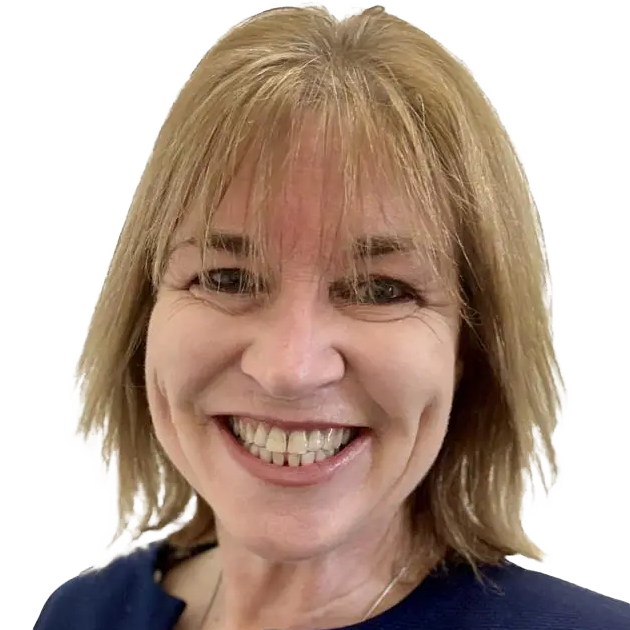

























Dr Emma Vaux OBE was appointed as RCP global vice president (VP) in 2025. She shares her background and the international work being done by the RCP with Commentary.
What is your clinical background – and what first drew you to the role of RCP global VP?
I’m a consultant nephrologist and general physician at the Royal Berkshire NHS Foundation Trust, where I’ve worked since 2003. Alongside my clinical work, I serve as clinical director for integrated medicine and recently demitted as associate medical director for patient safety. I’m also involved in renal services nationally through the NHS England South-East Renal Clinical Network, particularly around chronic kidney disease.
Throughout my career I’ve been driven about improving patient care not just through clinical practice, but through education, quality improvement and leadership. My involvement with the RCP has grown over many years, from contributing to the education faculty and examining for MRCP(UK), to working in JRCPTB, and serving as vice president for education and training and chief examiner.
What drew me to the role of global vice president was the opportunity to extend that work internationally. The RCP has an extraordinary global community of physicians, and I see this role as a chance to strengthen those connections – sharing learning, supporting leadership and ultimately improving patient care across borders.
You’ve done a lot of work in medical education – even receiving an OBE for services to medical education in 2021. How has your experience in this area helped to support the work that you’re doing with the RCP Global team?
Education has been a central thread throughout my career, and I’ve been fortunate to work with colleagues across many areas of training and assessment. Receiving an OBE for services to medical education was a real honour, but more importantly, it reflects the collective work of many people dedicated to improving how we train physicians.
That experience has shaped how I approach global work. Education is one of the most powerful ways that we can bring physicians together internationally. Whether it’s through training programmes, examinations, quality improvement initiatives or leadership development, education provides a shared language.
In the RCP Global team, we’re thinking about how we support learning that is accessible, relevant and collaborative. That includes working with our international members and fellows to ensure that educational opportunities are shaped by their contexts and needs, rather than simply exported from the UK.
One of the things I feel most strongly about is how much doctors in the UK can learn from our international members and fellows. Medicine is a global profession; innovation, resilience and new ways of thinking often emerge from very different healthcare environments. Our colleagues around the world are managing complex challenges with creativity and adaptability, and there is huge value in sharing those experiences.
For UK physicians, learning from international colleagues can broaden perspectives on patient care, service design and medical education. It reminds us that there are many different ways to deliver high-quality healthcare. At the same time, those exchanges strengthen the wider global community of physicians. When we share knowledge, support each other and build networks across countries, the ultimate beneficiaries are our patients. That sense of mutual learning and collaboration is something that I believe is central to the RCP’s global mission. The forthcoming Medicine 2026 conference includes a session and a workshop which brings this to life.
With nearly 30% of our membership located in 131 countries outside the UK, there is a huge variety in the RCP’s global work. What is your approach for responding to the variety of voices and needs of members and fellows?
One of the things that I find most inspiring about the RCP’s global community is its diversity. Physicians across the world are working in very different healthcare systems, often with very different challenges, but they share a commitment to high-quality patient care.
My approach is to start by listening. The RCP has an excellent network of associate global directors and international advisers who represent different regions of the world, and they play a crucial role in helping us understand the priorities of members and fellows locally.
Rather than assuming a one-size-fits-all approach, we try to build partnerships. That means working collaboratively with physicians, institutions and developing regional networks to advance initiatives that genuinely add value, whether that’s in education, leadership development or professional connection.
Over the last few months in this role, what projects have you been working on? Have any been particularly rewarding?
Over the past few months, I’ve been focusing on strengthening relationships across the RCP’s global network. That includes connecting with our associate global directors, engaging with members and fellows internationally, and understanding where the college can best support them.
A particularly rewarding aspect has been seeing how strongly our global community values the opportunity to connect with one another. Whether it’s through educational events, professional networks or collaborative initiatives, there is a real appetite for shared learning.
What I find most encouraging is the sense that global engagement is a two-way exchange. We learn just as much from our colleagues around the world as they do from us, and that mutual learning is incredibly valuable.

What are you looking forward to working on? Are there any big global projects ahead?
Looking ahead, I’m excited about building stronger global networks across the college. The RCP has an incredible reach – and there is huge potential to connect physicians with shared interests across different countries and regions.
Education and leadership development will continue to be important areas of focus. We want to support physicians at different stages of their careers and create opportunities for collaboration, mentorship and shared learning.
Another priority is strengthening partnerships with institutions and organisations internationally, ensuring that the RCP continues to play a meaningful role in advancing global health and professional standards.
A new RCP strategy is being launched soon. How will that impact the RCP’s global work?
The new strategy is an exciting moment for the college because it reinforces the importance of education and learning, voice and advocacy, and community and networks.
These priorities resonate strongly with our global work. Education and learning are central to how the RCP connects with physicians around the world. Our voice and our advocacy role are increasingly important in addressing global health challenges and supporting the profession internationally.
Perhaps most importantly, the strategy emphasises community and networks and that’s exactly what our global membership represents. Nearly one-third of our members and fellows are based outside the UK and they are a vital part of the RCP’s identity.
For me, the strategy is a reminder that the RCP is truly an international community of physicians. Our task is to ensure that every member and fellow, wherever they are in the world, feels connected to that community and able to benefit from it.
Find out more about the RCP's global session at Medicine 2026: Crowds, crises and chronic disease: medicine at a global scale.
Global work highlights
Europe:
- We are hosting a session on the role of the RCP in the UK health system at the German Society for Internal Medicine conference on 18–21 April.
- We have a long-standing relationship with the European Federation of Internal Medicine (EFIM), which exists to emphasise the importance of internal medicine in a world of increasing specialisation.
Americas:
- We maintain an annual connection with the American College of Physicians, typically at their conference in spring. Our two colleges have occasionally delivered joint activities, such as our 2021 health equity and justice webinars.
- RCP Global engages on a regular basis with the College of Internal Medicine of Mexico, often participating in their annual conference.
Middle East and North Africa:
- We celebrated the establishment of the first RCP membership network outside of the UK: the RCP Iraq Network. This highly effective network now delivers around 30 local training courses and an annual conference.
- In 2025, we delivered the first RCP Update in Medicine – Dubai conference, which attracted over 1,200 in person attendees. The 2026 conference will take place in June.
South Asia:
- The RCP supports the Jeelani Drabu Palliative Care Programme, which aims to build capacity and support local development of this vital speciality in Pakistan and the Jammu and Kashmir regions.
- We have a 10-year partnership with BMJ India, delivering a hybrid Diabetes certification course which is tailored to address the needs of doctors in India. Future work will branch into new physician specialities.
Asia Pacific:
- Working with the College of Physicians Malaysia (COPM) for the past 3 years, we have been jointly delivering two annual 2-day workshops for Malaysian doctors, focused on clinical audit (June) and leadership (October).
- In May this year, the first RCP-COPM Tuanku Nazrin travelling fellow, Dr Andrew Blanshard, will undertake his placement in Malaysia. We will share Andrew’s experience and learnings with you in a future issue.
Sub-Saharan Africa:
- This year, the RCP celebrates its 10-year partnership with the East, Central and Southern Africa College of Physicians (ECSACOP). Join us at their annual conference in Zambia later this year and read a Commentary article written by Dr Chris Pasi, ECSACOP president.
- In October, the RCP will join colleagues and friends at the West African College of Physicians (WACP) in Nigeria, to celebrate their 50-year anniversary. The RCP and WACP are exploring new partnership opportunities a s part of a renewed memorandum of understanding.
Dr Emma Vaux
Global vice president