





















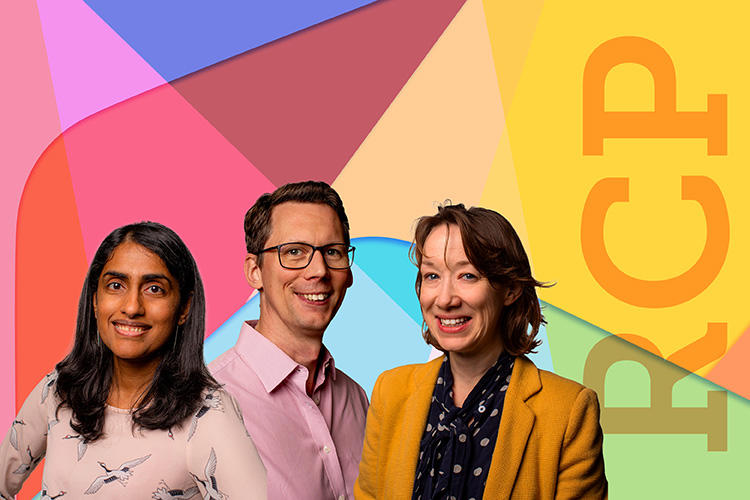





Dr Anita Banerjee is an obstetric physician, a diabetes and endocrinology consultant and an honorary reader in obstetric medicine at King’s College London. For the last 3 years, she has worked as an RCP censor. As her term comes to an end, she shares her experience in the post with Commentary – and encourages RCP fellows to apply.

I’m coming to the end of my 3-year term. It’s a privilege to have had this role, and as censor we always want to know how can we serve you better, and get the RCP to hear that.
Dr Anita Banerjee
RCP censor
What does the role of an RCP censor involve, and what have you enjoyed most about it?
I’ll be honest with you; it’s quite hard to define! As a censor, we have a number of roles. We meet the senior officers regularly. We’re involved in college conduct and disciplinary action, reviewing cases and supporting the registrar. We’re involved in looking at the bye-laws and the election process, ensuring that we’ve got the process right. We are invited to many different working groups and roundtables; specifically, I’ve been involved in a lot of prevention work. I’ve worked on RCP podcasts as well; for all the podcasts that are uploaded, one of the censors will make sure that the content is correct. We’re involved in the fellowship ceremonies, both for members and fellows – being part of that celebration is a great honour. The role of a censor is so wide.
I was not a PACES examiner but, when I became a censor, I was asked to train to be an examiner. Now I go across the country in that role – and I will continue doing that when I finish as a censor. It’s a great privilege to go across the country, examine people and later congratulate them for passing.
You have a wide range of opportunities as a censor. It’s someone who can be inquisitive, using that professional curiosity and ability to ask questions. You have a voice, you are involved in writing and understanding guidance and supporting senior officers.
In the past 5 years – particularly with COVID – supporting physicians with burnout and sustainability is really, really important. We have to get everybody’s ear, and support everybody in different phases of their career. You’ve got to understand the whole lifecourse of a doctor. I’ve been really interested in that.
It does take time to get used to the role – 6–9 months, maybe. In any big organisation, you have to learn what to do. That’s the beauty of having a group like the censors; there are eight of us and the role turns over every few years, so everyone is at different stages and very supportive. You learn from each other and take different responsibilities.
I’ve also enjoyed being involved in areas of medicine that I have a passion for; I have a particular interest in women’s health. As a diabetologist and obstetric physician, I was one of the founding members of the RCP obstetric medicine diploma. I wrote the curriculum and I’ve been involved in it from the beginning. I was very aware of the inequity in women’s health, and as a censor, I’ve really enjoyed putting together the flagship educational offerings for women’s health over the past few years. There’s an ongoing cardiovascular disease prevention summit that I have been involved in, both as a censor and as somebody who’s interested in women’s health. I probably wouldn’t have had the chance to get involved, had I not attended Education Board and Council meetings in my role as a censor; getting a far better breadth of what’s happening across the RCP.
I've been involved in mentor–mentee leadership, women’s health programmes and the Emerging Women's Leaders Programme. These educational workshops are done remarkably well; we get people from all across the country, and you get to learn from people who are working across the country, not just in your own hospital.

Has the role influenced or supported your professional development?
As a censor, you’re working with other consultants across the country and hearing their challenges. That has influenced who I am and who I want to be in the next years of my career – what I want to still be involved in. There’ll be opportunities to strive and grow.
The active listening and learning that you need as a censor support you with your own professional development. That’s a key skill of a health professional; everybody needs to be actively listening. You go into meetings with no fixed ideas and you have an opportunity to listen and learn. That’s definitely changed my practice and what I bring back to my own hospital and other external projects, whether locally, regionally or globally. The role makes you a better physician. It gives you an opportunity to see things that you would never have seen otherwise. That enables you to reflect on your own work, who you are and what you are able to do.
In the role of the censor, being invited to different meetings – locally, regionally and sometimes nationally and internationally – enables you to share that knowledge back on the ground. Most of us are still working as physicians.
Sometimes you do need to step in and help out with unexpected things. Sometimes you will be taken out of your comfort zone. As someone who’s coming to the end of my term in the role, I would not have imagined getting involved in some of the things I’ve done when I first interviewed.
What experience does a censor need? Who makes a good censor?
Having a real range of expertise, experiences and opinions is really valuable as a censor. if we’re all clones, it’s boring and change can’t happen; you’re too fixed. You’re never too young or too old to be a censor. It’s part of your journey and it’s your time to contribute. It’s important that you get an opportunity to see things that you don’t always get involved in, seeing those specialties or topics with fresh eyes.
Being a censor is not a paid job; it’s done as an extra. So, your time on the shop floor doesn’t change in the years that you are a censor. That doesn’t mean that you’re busy all the time, as there are eight of us sharing the role. Being a censor is not measured in how many things you’ve done in a year; it’s more about what you’ve been involved in and where you’ve taken it.
That’s why it’s important to have a breadth of people joining us as censor, enabling them to grow. That will make people less afraid to apply and be part of the RCP. The RCP needs to evolve and grow, and we are part of that. The role as a censor is a real privilege.
On College Day 2026, we had all eight censors together and we are all different. Our strength is that we have different opinions and we enable everybody’s voice to be heard. Being a censor is to be someone that people want to speak to and confide in, so we have to ensure that we maintain that integrity.
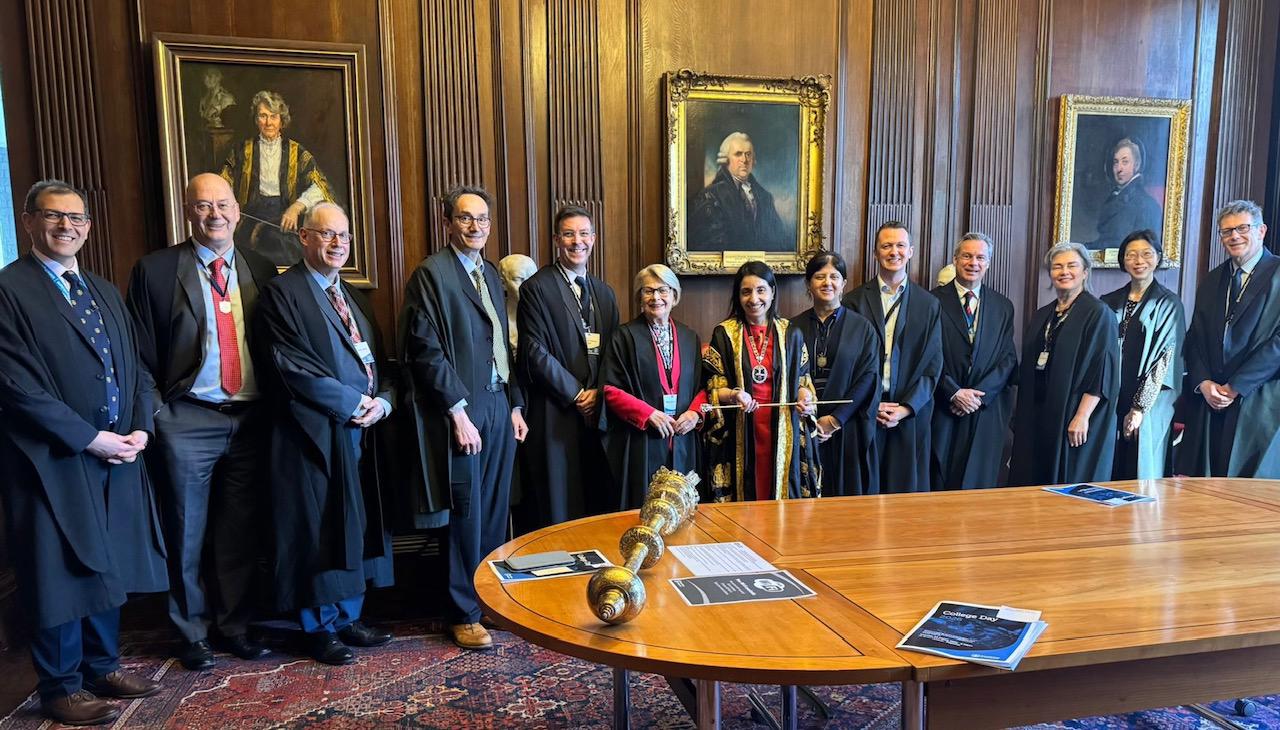
Image: The RCP censors and senior officers
What advice would you give to someone considering applying to become a censor?
You’re never too young or you’re never too old, okay? If you’re someone who has energy, is willing to listen and bring your new ways of thinking to the table, that’s what the RCP is looking for.
Dr Anita Banerjee
RCP censor
We’re not looking for someone who wants to take on what Anita has been doing, but someone coming with fresh ideas.
Being a censor is not like your IMT1 where there’s a curriculum; you have to take off and move it forward. It’s an opportunity to listen, learn, grow and then be part of moving the RCP along. And you’re not alone in that, you’re part of the team and there’s lots of support.
So why would you apply? Because you want to be part of a team, you want to grow, you want to listen and learn. If you have different medical interests, there’s always an opportunity to work on projects related to that. I've got a much stronger 360-degree lens than I had at the beginning of my censor role.
There’s something new every day – that’s the beautiful thing. Things are evolving in the RCP, and that agility and being part of it is really exciting. You’re not just hearing about change, you’re a part of steering it. It's a great opportunity and everyone should consider it.
What inspired you to apply for the role of RCP censor?
When the college was founded over 500 years ago, the censors were the people who held vivas (spoken exams) and granted licences to those allowed to be doctors. The Censor’s Room at the RCP at Regent’s Park in London is a beautiful place to be.
I’ve been a member of the RCP for years. I started first as an associate college tutor, then college tutor, then regional adviser. When the advert went out for the censor role, I thought that it was a really interesting position because you are not a senior officer, but you are an important part of college life.
As a doctor, you end up relooking at things every 3–5 years; you’re always trying to do better, make a change, be a part of something and ensure that you’re bringing everybody together. When the advert came out, it was a great opportunity to be part of something new.
For me, the role meant that you’re part of a group, you’re listening and you’re a barometer of bringing back understanding of what’s going on with physicians. You’re a voice of reason, listening to members and then providing advice and support to the president, registrar, the vice presidents and to RCP Council. Censors don’t take sides; we listen and support. That’s really important in a big college.
If you've been involved in the RCP in different ways – as a tutor or regional adviser, or in the Updates in medicine conferences – you've got that bigger picture of what’s happening across the country, where the challenges are and what is changing. The role of the censor enabled me to think about what can we do differently and better. When I interviewed for the role, it felt very utopian; what could be, what medicine could look like and what could I do. It wasn’t about me as a censor, it’s about what I can do for people and for the RCP.
