










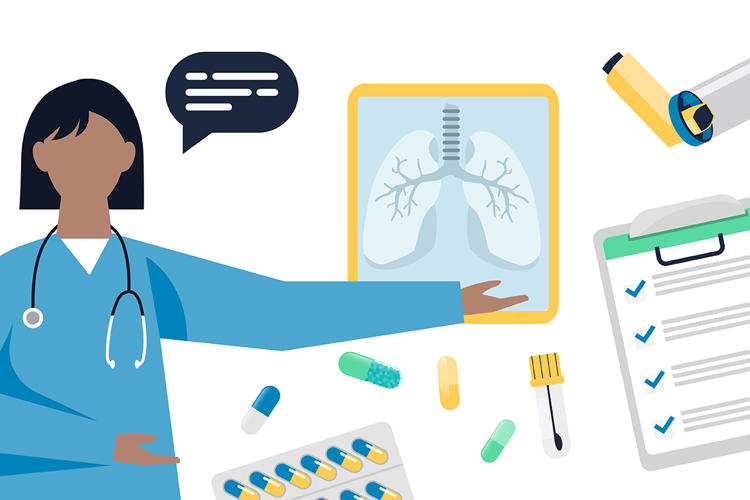
















The revised Green physician toolkit will support physicians to play their part in tackling the climate crisis with an updated range of actions to deliver more sustainable care and advice on managing climate-related health risks, such as heatwaves and air pollution.
The Royal College of Physicians (RCP) has published updated guidance to support doctors to deliver more sustainable care, following significant concern among clinicians about the risks it poses to patients.
New findings from an RCP member survey carried out in June found that 75% of 490 responding physicians were worried about the effects of climate change on patient health, while 69% were either very or somewhat concerned about the environmental impact of clinical practice.
The updated RCP Green physician toolkit, developed by a short-term clinical working group made up of the medical specialties, academic and patient representatives, sets out a range of new recommended actions including:
- Prescribing lower-carbon medicines such as dry powder inhalers, reusable insulin pens and oral medications where clinically appropriate.
- Working with patients to optimise medicines use, including routine medication reviews and appropriate deprescribing.
- Delivering more efficient care through same-day services, integrated multispecialty clinics and streamlined pathways.
- Adapting care plans to account for environmental risks such as adjusting medications that are sensitive to extreme heat or incorporating air quality alerts into care plans for patients with respiratory conditions.
- Supporting prevention and healthier living by providing tailored advice on healthy diets, reduced alcohol use, regular exercise and smoking cessation, and signposting patients to the most relevant support services.
The toolkit also gives real examples from clinicians leading the way, from ensuring medication adherence by asking patients a simple prompt, to adapting care plans during heatwaves and promoting reusable insulin pens for diabetes care. It brings together the latest evidence about the health impacts of the climate crisis to support doctors to build knowledge and understanding.
The climate crisis is a health crisis – and doctors are already seeing the impacts firsthand, such as the additional pressures the NHS experienced during this summer’s heatwaves. Between 2020 and 2024, heatwaves alone caused 10,781 excess deaths in England.
The NHS in England contributes around 40% of public sector emissions, increasing instances of extreme heat, air pollution and shifting patterns of vector-borne diseases. The RCP welcomed the 10 Year Health Plan committing to prioritise the NHS achieving net zero by 2040 for emissions it controls and by 2045 for emissions it can influence. Reducing the NHS’ impact on the environment is essential and every member of staff has a role to play.
Dr Mark Harber, the RCP’s special adviser on healthcare sustainability and climate change, said: “Doctors are deeply concerned about how climate change is affecting their patients and the nation’s health. This toolkit equips physicians with simple, practical steps to improve patient outcomes and reduce the environmental impact of healthcare. Even under high clinical demand, prioritising sustainable care now will ultimately reduce future strain on the NHS.
“What physicians need is adequate time, resources, as well as backing from system leaders to make sustainable healthcare a reality. Without this support, clinicians cannot contribute to delivering the net zero ambitions for the NHS set out in the 10 Year Health Plan. Sustainable healthcare to protect patients from the growing health harms of climate change must be recognised as an integral part of good medicine – not an added extra.”
The RCP is encouraging NHS England and the Department of Health and Social Care, integrated care boards and system leaders to ensure clinicians have adequate time and support to make sustainability a core part of good clinical practice. In the RCP’s survey, while 61% of 495 doctors were already considering the environmental impact of their decisions, of those who were not, many said this was due to a lack of time, lack of organisational support or gaps in training and awareness.
Commenting on the toolkit, British Geriatrics Society sustainability representative on the group that developed the toolkit, Dr Florence Wedmore, said: “Older people are among the most vulnerable to the health impacts of climate change. We are already seeing how extreme heat, poor air quality and disrupted services disproportionately affect those living with frailty. Geriatricians want to protect patients from these risks, but we need practical tools that make sustainable care part of routine clinical practice. This guidance helps clinicians take steps that are achievable now, while maintaining the highest standards of care for older adults.”
Dr Jamie Phillips, Society for Acute Medicine sustainability representative on the group that developed the toolkit, said: “We cannot remain passive on the impact of climate on healthcare, and healthcare on climate. In Acute Medicine, we are perfectly placed to streamline care pathways and reduce unnecessary investigations at the front door. Our oversight of ambulatory services extends our reach to an even larger cohort of patients where we can make change.
“The updated toolkit provides case studies and practical tips on how to do this, empowering clinicians to embed sustainable healthcare into everyday practice. Easy to use and with actions ranging from 'quick wins' to wider change, this is an essential toolkit for all clinicians.”
The Green Physician Toolkit was first published in July 2024.
The updated Green Physician Toolkit was developed in consultation with a short-term clinical reference group, comprising of physicians from a range of specialties, as well as patient and academic representatives. Further feedback was provided by the RCP’s advisory group on healthcare sustainability and climate change and approved by RCP Council prior to publication. Dr Mark Harber, Dr Florence Wedmore and Dr Jamie Phillips, all quoted within the press release, were part of the group.