
























Resource

14/10/24

14 October 2024

Uncertain recovery communication guide

Communication In The NHS

We wanted to use our lived experience as palliative care physicians to share compassionate communication tips and a simple framework with some helpful concepts for starting a conversation.

This guide could be used when it has been recognised that recovery is uncertain to prepare patients, and those important to them, for potential different clinical outcomes. The conversation may progress to treatment escalation planning or a discussion about end of life care, but in some situations will solely serve to highlight the clinical uncertainty.

This guide is not intended to be prescriptive but offers a practical approach which other clinicians may find helpful in their own practice. 

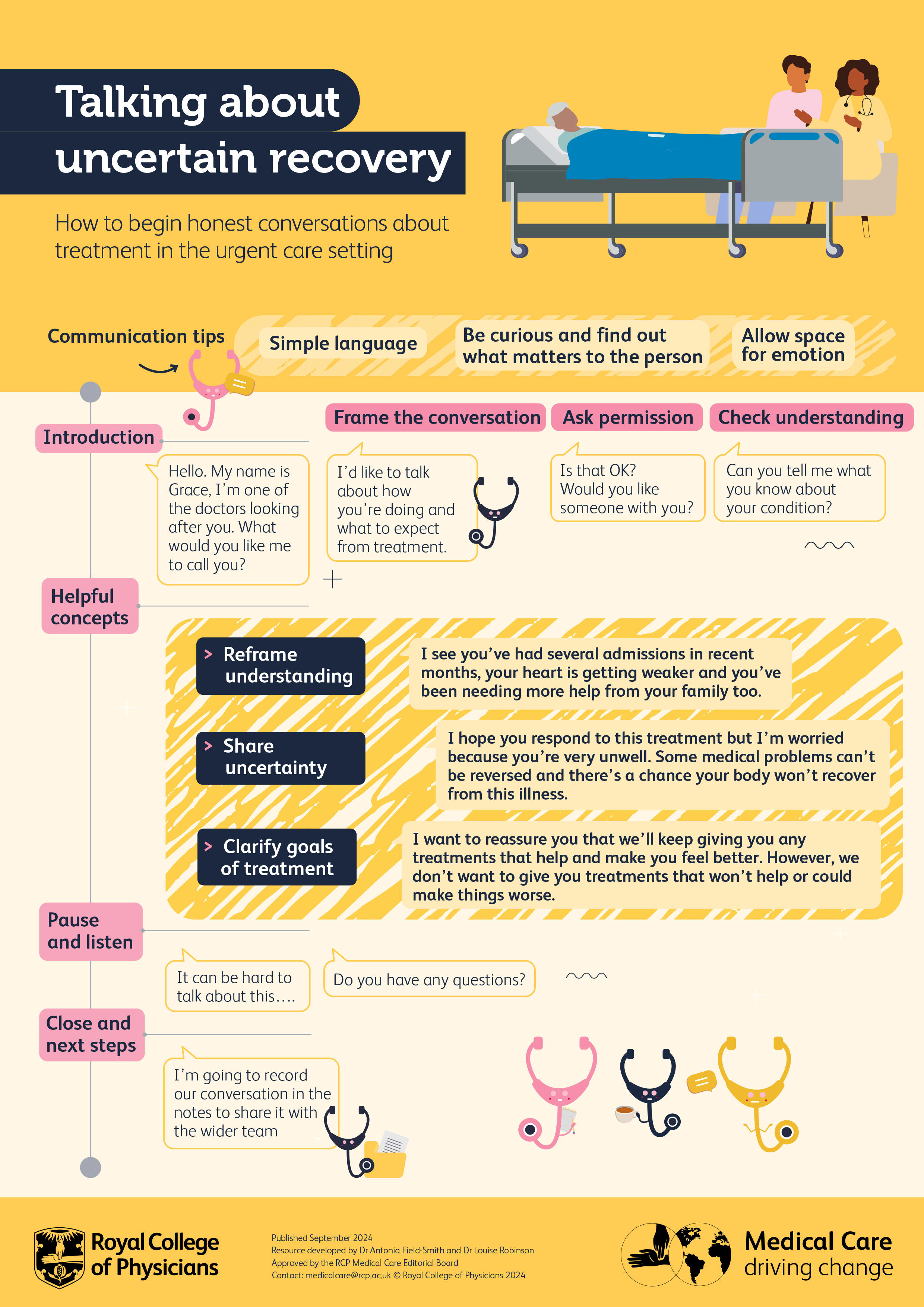
Communication infographic guide

Title: "Talking about uncertain recovery: How to begin honest conversations about treatment in the urgent care setting."
Main Sections:

1. Communication Tips (Top row with icons):

  • Simple language: Use straightforward and clear language.
  • Be curious and find out what matters to the person: Understand the patient's concerns and priorities.
  • Allow space for emotion: Give the patient room to express their feelings.

2. Introduction Section:

  • Example introduction: "Hello, my name is Grace, I’m one of the doctors looking after you. What would you like me to call you?"
  • Frame the conversation: "I’d like to talk about how you’re doing and what to expect from treatment."
  • Ask permission: "Is that OK? Would you like someone with you?"
  • Check understanding: "Can you tell me what you know about your condition?"

3. Helpful Concepts Section (Labelled in yellow background):

  • Reframe understanding: Example: "I see you’ve had several admissions in recent months, your heart is getting weaker and you’ve been needing more help from your family too."
  • Share uncertainty: Example: "I hope you respond to this treatment but I’m worried because you’re very unwell. Some medical problems can’t be reversed and there’s a chance your body won’t recover from this illness."
  • Clarify goals of treatment: Example: "I want to reassure you that we’ll keep giving you any treatments that help and make you feel better. However, we don’t want to give you treatments that won’t help or could make things worse."

4. Pause and Listen Section:

  • "It can be hard to talk about this…"
  • "Do you have any questions?"

5. Close and Next Steps Section:

  • "I’m going to record our conversation in the notes to share it with the wider team."