



























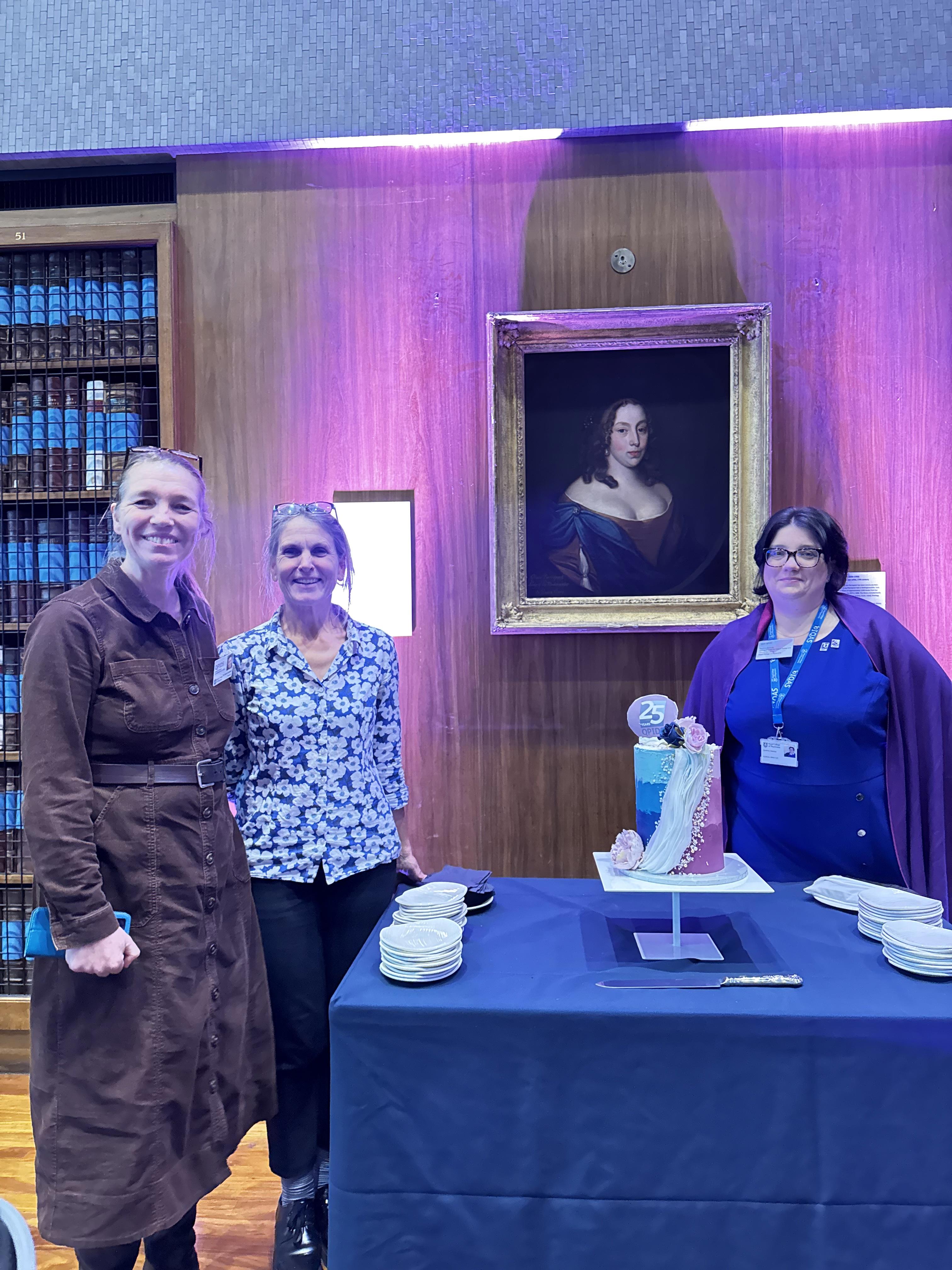
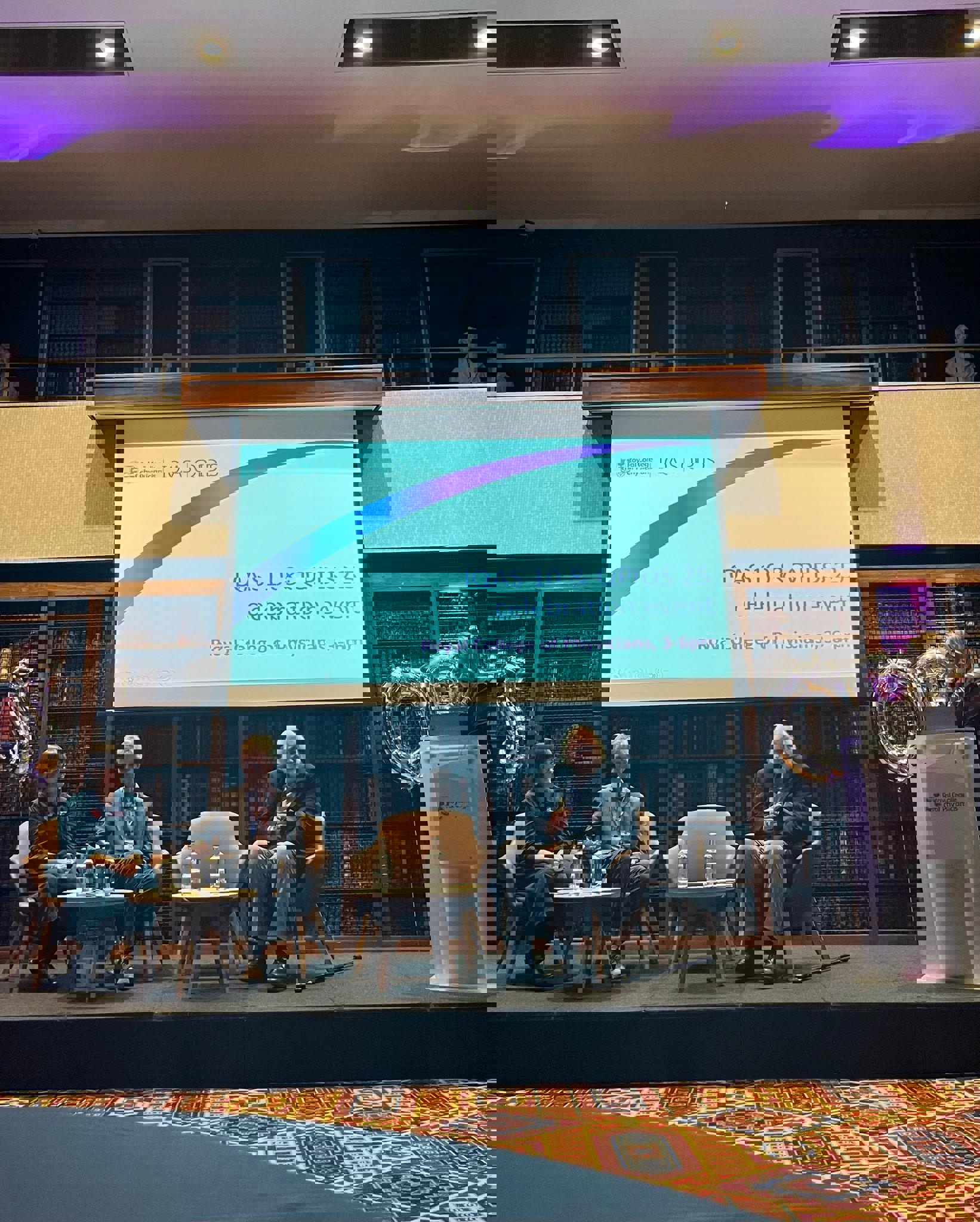
Two of the RCP’s accreditation programmes – Improving Quality in Allergy Services (IQAS) and Quality in Primary Immunodeficiency Services (QPIDS) – marked their anniversaries at the RCP at Regent’s Park, London with a day of reflection, collaboration and celebration.
The event highlighted key milestones, patient-centred care and upcoming plans for allergy and immunology services across the UK.
Guests included clinicians, nurses, patient representatives and past programme leads whose initial work laid the foundation for today’s programmes.
The morning programme offered time for IQAS and QPIDS assessors to share experiences of service assessments, including best practice, and sharing their knowledge. One assessor summed up the sentiment perfectly: ‘It was universally acknowledged as a huge privilege to have access to all areas of a service.’
The event reflected on the progress made over decades within both programmes.
Quality in Primary Immunodeficiency Services
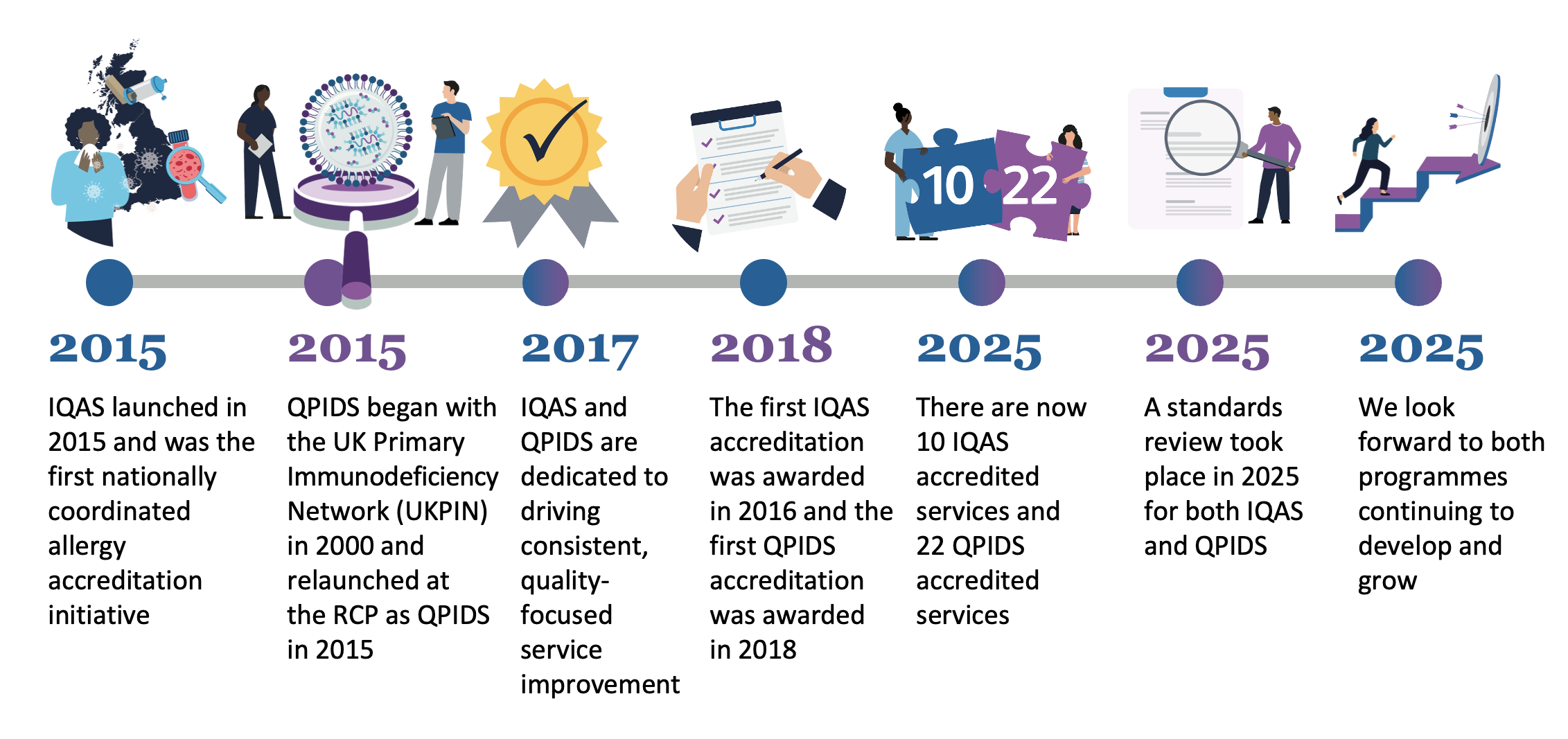
QPIDS, now in its year 25, originated as the UK Primary Immunodeficiency Network. It became the QPIDS programme, within the RCP Accreditation Unit, in 2015. The RCP officially launched the QPIDS accreditation scheme on 5 August 2015; opening registrations for primary immunodeficiency (PID) services in the UK and Republic of Ireland.
Today, it supports 22 accredited services, with 17 more working towards accreditation across adults and paediatrics, ensuring patients with primary immunodeficiency receive consistent, high-quality care.
Improving Quality in Allergy Services
IQAS, celebrating its 10-year anniversary, was established as a result of the 2003 RCP report Allergy: the unmet need. This report highlighted inconsistencies in allergy services and called for standardisation and quality improvements. IQAS formally opened for registration on 25 November 2015, marking the first national allergy accreditation initiative.
Currently, IQAS supports 30 registered adult allergy services, with 21 services still working towards accreditation.
The NHS specialised commissioning report service specification outlines that: ‘accreditation involves evaluating a service against a set of standards to promote a culture of continuous improvement, thereby providing assurance to service users, referrers and commissioners about the quality of the service provided.’
Within this document, it is outlined that all centres should be registered and actively working towards – or have achieved – accreditation through the RCP IQAS programme.
Celebrating the anniversaries
Patient-centred care was a recurring theme throughout the day.
‘All primary immunodeficiency services should strive to achieve QPIDS accreditation. Doing so requires listening to patients, ensuring person-centred support, and reducing variation in care.’
Dr Sarah Goddard
QPIDS clinical lead
Sarah’s statement reinforces findings from Immunodeficiency UK’s 2023 Patient Experience Report, which revealed that only 52% of respondents reported a good or very good quality of life post-diagnosis, while nearly 20% felt excluded from treatment decisions.
A recommendation from this report highlights that ‘all primary immunodeficiency services should strive to achieve the (RCP QPIDS) accreditation’.
The afternoon session brought discussion, facilitated by Cynthia Yim, QPIDS senior project manager, where both clinical and lay assessors shared candid reflections on their experiences. They spoke of the privilege of assessment visits, which offer a great insight into service delivery, and the strong sense of team spirit that has been key to success.
Looking forward
Both programmes have ambitious plans for the future. IQAS aims to expand into paediatric allergy standards and encourage dual accreditation for services delivering allergy and immunology care. QPIDS continues to champion access to psychological support, transition planning and home therapy, ensuring that patients receive holistic care.
Throughout her discussion, Nasreen Khan, IQAS clinical lead, summarised the aspirations of IQAS going forward: ‘To support services in delivering the highest-quality care, underpinned by standards that evolve with clinical practice and patient needs.’
As IQAS celebrates a decade and QPIDS marks a quarter-century, the message is clear: quality improvement is a journey, not a destination. These programmes exemplify what can be achieved when clinicians, patients and professional bodies unite around a shared vision – better care for all.
Dr Goddard’s closing words captured the spirit of the day: ‘amazing patients, amazing teams, amazing progress.’
