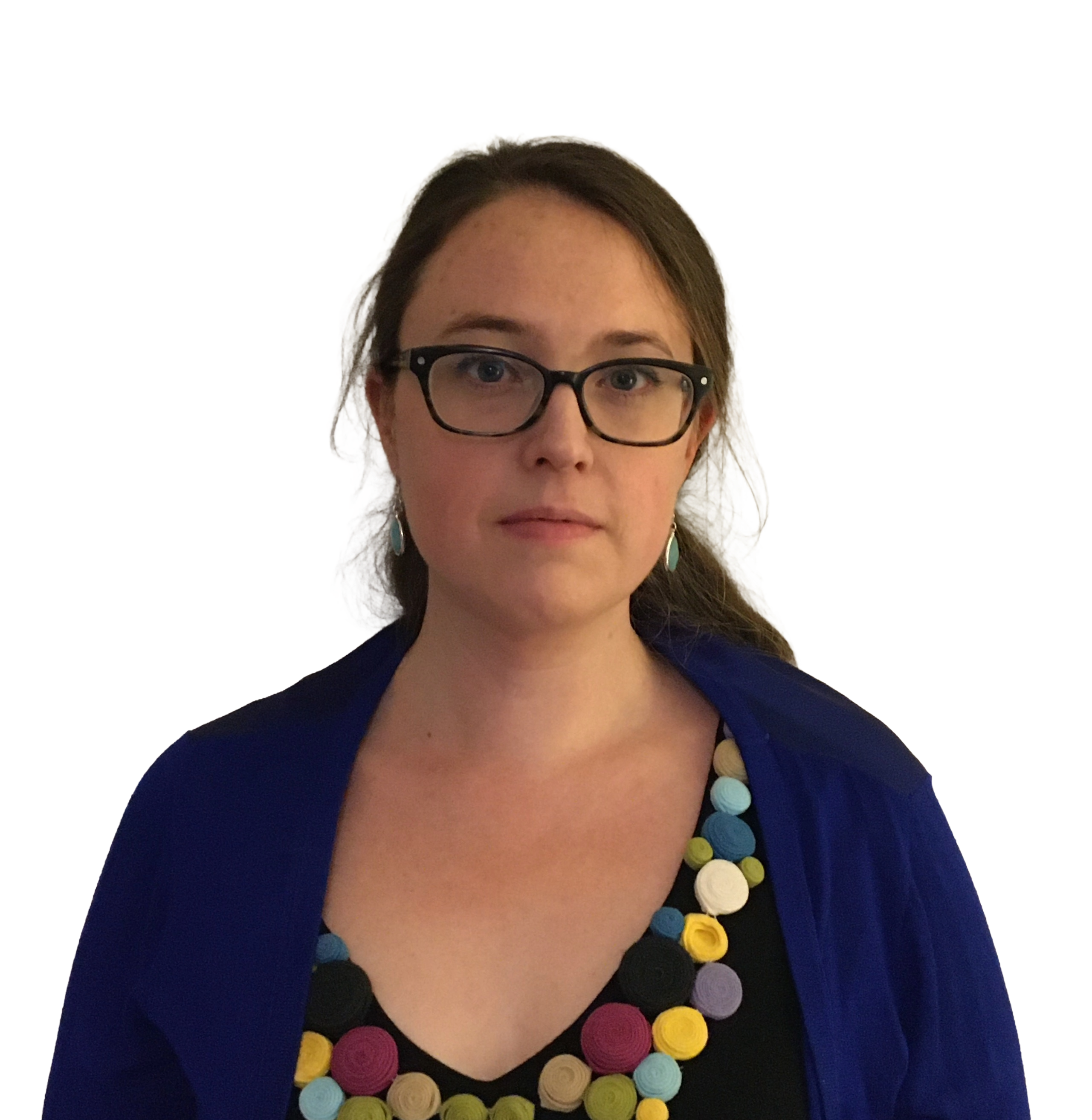













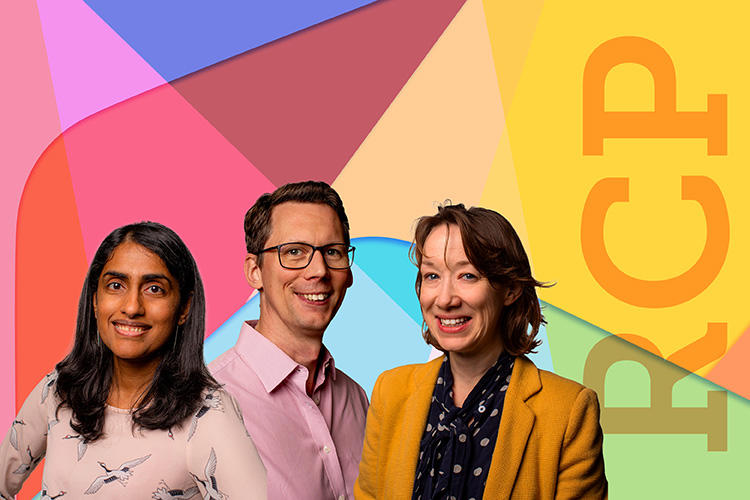




Dr Alexis Paton is director of the Centre for Health and Society at Aston University, where she is a senior lecturer in social epidemiology and the sociology of health. She is also the chair of the RCP's Committee on Ethical Issues in Medicine and the lead for the social and psychological aspects of health curriculum for Aston Medical School. Her new book, Understanding health, illness and society: A patient-centred approach to healthcare, shows how social structures and social norms shape both individual and collective health.
What prompted you to write a book about the sociological determinants of health?
It is something that I’ve wanted to do for a long time. I’ve been teaching medical students about how the social world impacts on health for 15 years and it became clear that we need to talk more about this – in particular, in the last 5 years since the pandemic.
I wrote this book to help shed light, not just on how the world around us can impact our health, but how you can’t really escape it. It’s shaping your health each and every day. If you want to practise good medicine or understand how to be healthy, you need to understand all the different aspects that go into your health – not just lifestyle, choice and genetics.
Could you give an overview of the topics that you discuss and the key messages that you share in your book?
Understanding health and illness in society is really about looking at those social forces that influence health; things like poverty, class, gender, ethnicity, housing and employment. These don’t necessarily seem like they’re related to health, but they are what determines who gets sick, who gets well and who stays well. So it’s really important to understand them.
The book is about trying to understand everything, from commercial influences, policy and public health campaigns, to where someone grew up and where they work. All of that comes together to influence health. The book is trying to capture that interlinked web, which is tricky.
I introduce the book by asking the question: what is health? Then I show all the different ways that question has been answered over the years; it’s really interesting to go back in time to see what health meant in the Middle Ages or the Victorian industrial period. What did health mean 70 years ago, when we were starting to build the NHS? How [society] defines health has changed over time. I wanted to set the stage about how health is really a fluid thing.
I end by talking about what health looks like in Britain in 2025. The conclusion is a story that’s quite close to my heart; I share the story of a poor household taking care of a premature baby. It shows all the different ways that the world influences our health, because their housing, their lack of employment, is causing them to be unhealthy. It’s all interwoven in a really complicated web.

The book uses lots of real-life case studies. Are there any others which have stood out as you've been researching this book?
I’m a social scientist who goes out and does research. It’s a great job – I’m like a fly on the wall, watching how people interact in healthcare settings and asking about their experiences.
I finally had time to look at the opioid crisis in the USA. It's a really good example of the social determinants of health, and brings in other aspects like politics and commercial ventures. When I started to read around the different aspects of the opioid crisis, I started to realise that it is a crisis of political and social making.
It isn’t about people making decisions to take an addictive drug and become addicts. It’s a story about a country that has no protected sick policy – nothing in federal or state law that requires employers to provide their employees with sickness support. You can lose your job if you take a sick day, so you’re setting up an environment where you can’t be sick.
If you don’t have health insurance, you pay for [treatment] so you doubly can’t get sick. If you do have it, not all insurance is the same; a lot of people living in Appalachia [which is a poor area] had insurance that was more likely to cover pills than treatment. Now we’re in a situation where, if you are sick or injure yourself, you might really need physiotherapy and treatment like that. Your insurance doesn’t cover that – but it does cover pills.
Then we have the final nail in the coffin; a pharmaceutical company decides that it wants to get involved in chronic pain management. It wants to make money, and chronic pain management is long-term money making. So they pour all their money into oxycodone which is cheap, it’s a pill and it works. And everyone’s been told that it’s not addictive.
So now you have your perfect storm. A bunch of people who have to work, even if they’re sick, and insurance companies that will only pay for pills – and everyone thinks that this pill is safe to take. The US Federal Drug Administration (FDA) puts no cap on how much pharmaceutical companies can spend on advertising, so now there’s this advertising machine saying that they’ve got the magic pill. There are very few checks and balances on how drugs are advertised and distributed in this commercial world.
For me, this really crystallises why we need to care about how the world around us influences health. If we let all those things run unchecked, then it can create millions of people who are addicted to a drug, and hundreds of thousands more who die from it.
It’s helpful to think about how other countries operate their healthcare, because that comparison lets us understand where those subtle differences lie. The UK doesn’t have an opioid crisis in the way that the USA does. That is down to political decisions around health, but also decisions around social care, welfare and how we manage the drugs that we allow into our healthcare system.

You cover the evolving question of how we see health. Why is the perception of health shifting from being about medicine and individuals, into looking at the wider social determinants? How long has this shift been happening?
Social scientists have known for a long time that that relationship is there. But what’s really made the difference is the pandemic – it showed the unhealthiness of our nation.
We’ve had moments like this in the past. The world wars, where men were being conscripted into the army; they would show up and we realised that half the population was in really [bad] health. COVID-19 is another watershed moment where we realised that a lot more of the population would have not got sick and died if we had been healthier going into the pandemic. So, of course, people start asking: why weren’t they healthier?
The answers are about poverty; the kinds of work that people do, and the cost of living – of keeping your house warm or buying good food. Those are the mainstays of health. We just couldn’t ignore the data [during the pandemic]. People who had less money were dying more than people who had more money. We couldn’t deny the relationship between poverty and death from COVID-19. It proved, again and again, that there was a relationship between where you lived, what you did, who you were and your health – that had nothing to do with genetics, clinical factors or lifestyle choices.
The answer to what it means to be healthy does evolve but [aspects] stay the same – you need a roof over your head, enough to eat, and to stay warm, happy and dry. In 2025, there’s a huge portion of the population that can’t do that. It’s slightly mindboggling that we’re still in that situation.
COVID helped to crystallise [the need for public health] in the public imagination in ways that hadn’t happened before. My hope is that the groundswell that we’re seeing around understanding health inequalities and the determinants of health will help push forward the need to ask for more change.

If you had a busy medical student or professional who only had time to sit down and read one chapter, where would you recommend they start?
It's between chapters 2 and 6 for me. Chapter 2 tackles how the world around us impacts on health from a societal level; health is not happening in a vacuum, it is subject to social, cultural, environmental, commercial, political factors that make up everyday life. Chapter 2 introduces this technical term – the determinants of health – so it is quite useful.
Chapter 6 is all about how politics impacts on health. I don’t think medical students or the medical profession realise just how instrumental politics is to shaping individual and population health. It’s really important for us to understand that this ‘unclinical’ thing really drives the direction of our healthcare and the health of our nation.
What are you hoping that the impact of the book will be?
My hope is that as many people as possible read the book. Even though it is written with healthcare professionals and students in mind, I think that – in particular – politicians should read this book. They would have a much better understanding of what health and healthcare mean.
My hope for the book is that it helps the social determinants of health become a totally normal thing for us to talk about at all levels; that people are viewing those as just as important as your daily steps, how much fruit and veg you eat, how many alcoholic units you drink.
We should start to understand health in a much more holistic way. It’s really crucial that we do that from the very beginning. Healthcare students are a really important part of my audience because the more that they know about this area, the more they’ll pay attention to it. They will develop into healthcare professionals who always have this topic at the forefront of their minds, who consider not just the clinical presentation but all these other factors, to best support patients.
The Sick Society Podcast
Would you like to hear more from Alexis? A new podcast is challenging the medical model head on, showing how housing, work, money, neighbourhoods and political decisions shape health outcomes as powerfully as smoking, diet or genetics – a public health emergency hiding in plain sight. Cohosts Alexis and Sir Andrew Goddard (PRCP 2018–2022) explain – in stark, accessible terms – how modern society itself is driving illness and inequality. Each season’s episodes combine expert insight with real-world stories to reveal why most of what makes us sick never happens in hospitals – and why they think we urgently need to start talking about health differently.
Available on all the main platforms (Spotify, YouTube, Apple Podcasts) now.

Alexis Paton
Chair of the RCP's Committee on Ethical Issues in Medicine