


























Dr Mark Weatherall FRCP shares the history and legacy of Munk's Roll – now Inspiring Physicians – the series of RCP obituaries or biographies of fellows, starting from 1518 to the present day.
The term ‘obituary’, deriving from the Latin obitus (meaning going down, setting or death), originates in the early 18th century, though the use of the word ‘obit’ to designate the notice of someone’s death may go back as far as the late 1450s. Its use as a term to designate an announcement of a death, particularly in a newspaper, usually comprising a brief biography of the deceased, first appears in the late 1730s.
While obituaries were featured in publications such as the Gentleman’s Magazine from the turn of the 19th century, they were initially rare in medical journals – generally restricted to only the most prominent individuals, such as Edward Jenner. By the 1840s, however, obituary notices became more common. The Provincial Medical and Surgical Journal (precursor to the British Medical Journal) contained obituaries from its very first 1840 edition. The Lancet, founded as the antithesis of the gentlemanly club of upper-echelon London medical society, started to carry obituaries from 1845.
The collection of biographical notices of fellows of the Royal College of Physicians, known as Munk’s Roll (and latterly as Inspiring Physicians), originated in this era. Its creation was the work of the college’s Harveian librarian William Munk (1816–1898). In the 1850s, he gathered together what biographical information he could muster on all the fellows of the RCP, from its creation in 1518 up to its move to its contemporary premises on Pall Mall in 1825.
The first edition was published in three volumes in 1861. In the preface to the second edition, Munk emphasised the value of the obituaries published by The Lancet and the Medical Times and Gazette as sources for the 19th-century Munk’s Roll entries. A further eight volumes appeared over the next 140 years, before the project was moved online in 2005.
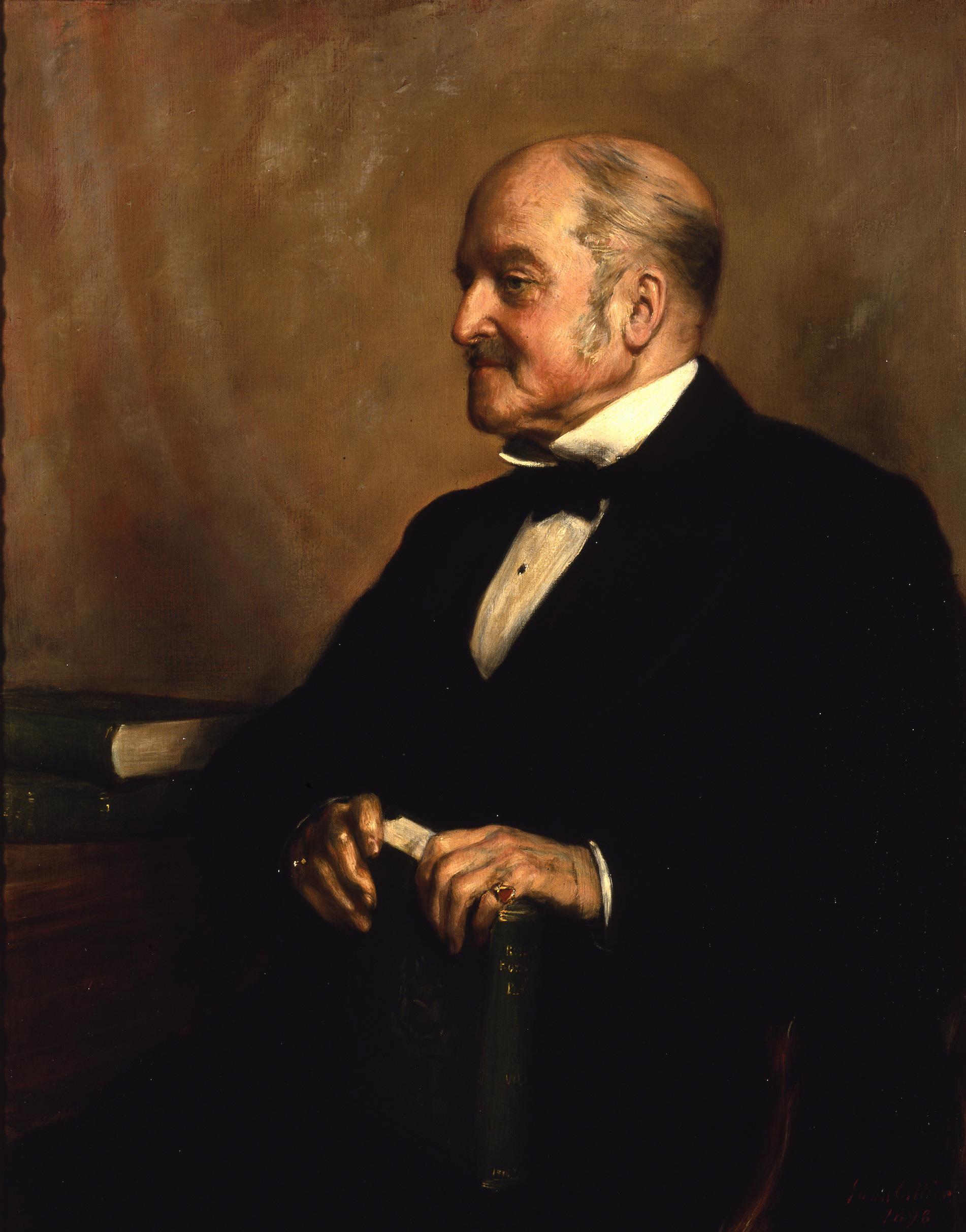
Portrait of William Munk. Photography: Mike Fear.
What are obituaries, and what are they not?
There are no fixed criteria for the writing of obituaries. Clare Brant writes in her article, ‘Obituaries: a dead important genre’: ‘Obituaries are micro-narratives in which distinct conventions and tensions are at work. Humanist and historical, emotional and dispassionate, philosophical and random, obituaries have a literary nexus that encompasses reverence, irreverence, grief and (in some cases) relief.’
The most basic form of the genre is a simple death notice, in which it is customary to include details of the dates of birth and death. Beyond that, there is an almost endless variety of content. The nature and extent of this depend on factors such as the amount of information available about the subject, the nature of the publication in which the obituary is to appear and its intended audience, publication guidelines on length, content and style, and the personal interests and idiosyncrasies of the obituarist.
Obituaries are not hagiographies, encomia or eulogies; they generally minimise explicit praise, for which there are other outlets and memorial forms. Obituaries appraise lives, explicitly or implicitly. They may benefit from, in the words of the former editor of The Times William Haley, ‘judicial detachment’. Tim Bullamore, obituarist for the Daily Telegraph, captured this when he wrote in 2012 that ‘the obituary is much, much more than a notification of death: it is the first attempt at a posthumous biography; it is an assessment of a life lived: with all the advantages and disadvantages that this person was born with, and with all the opportunities and difficulties that life threw at them, what did they make of their three score years and ten on this Earth?’.
Obituaries are not full biographies, though can provide a sketch or a sense of what a full biography might look like; or, as humourist and author Quentin Crisp put it, ‘an autobiography is an obituary in serial form with the last instalment missing’. Munk captured this when he used the term ‘biographical sketches’ to describe the entries in his Roll. Obituaries may celebrate the person who has died and may be produced with the intention to inspire others, but they do not have to. Traditionally, obituaries have been subject to rhetorical distancing – by which the subject is referred to in the third person, while explicitly including notions of grief. While many obituaries tend to be dull records of success, the idea that an obituary might hint at – or detail – a more ‘warts and all’ picture, that they might be humorous or even disrespectful, is increasingly understood to be an appropriate use of the literary form in the 21st century.
Obituaries, therefore, are primary historical resources in their own right. Yet like all primary sources, they have to be read in the context of the time in which they were produced, and the purpose for which they were written. Research clearly shows that the basic question of who has an obituary written about them is highly tied to prevalent views about the worth of certain groups in society. Obituaries in newspapers, for example, for most of the last 200 years, have tended to be written about men rather than women, and have generally excluded members of groups on the basis of race, colour and so on. Over the last few decades, attempts have been made to redress the balance with specific projects such as The Black Obituary Project, launched in 2016.
Like any other historical document, therefore, obituaries reflect the prevailing mores, and are subject to omissions – both intentional and unintentional – that may be problematic to future readers. With regard to medical obituaries, for example, the historian Jean Loudon notes that, in pre-1850 obituaries, ‘medical practitioners were extolled for their charity to the poor and their Christian lives, or, conversely, they were regarded with awe for the amount of money they managed to leave (which was often detailed to the last pound) or commiseration was offered for the destitution of their dependants’, contrasting this with the lack of such information in modern equivalents. In this way, historical research may demonstrate the inadequacies of the contemporary obituary, but as historical documents, obituaries should be left to stand and be judged in their own right, even if – particularly on openly available and modifiable online platforms – it may be appropriate to append additional information to provide context for contemporary readers.
Munk’s Roll, for example, contains numerous physicians, particularly of the 18th century, who were not only were leading doctors, but also businessmen who made money from the slave trade. This fact is rarely, if ever, mentioned in the biographical sketches produced by Munk in the mid-19th century, by which time the slave trade had been abolished. Certain physicians of more recent times, for example the psychiatrist William Sargeant, were feted in their lifetime for their work. But subsequently, they have been shown to have used techniques and to have practised in a manner not only at odds with our contemporary views, but that would have been frowned upon even at the time that they lived. Drawing the attention of users to these facts, and providing additional information and references for a fuller and more complete understanding of the person, is an important part of the role of the curators of such resources.
In summary, as psychiatrist and author Ann Dally notes: ‘The medical profession understands itself through its history. Obituaries are important in this. Current beliefs about the past influence the nature of practice. Sound practice in the history of medicine is essential to the health of the profession.’ This is perhaps especially true when we look to the past and do not like what we see.
Conclusion: whither Munk’s Roll?
What, then, should be the nature and purpose of a collection of obituaries – or biographical sketches – for a 21st-century professional organisation such as the RCP, the stated mission of which is to educate, improve and influence for better health and care?
At the most basic level, the RCP is its history. Its ability to influence contemporary healthcare for the better derives from its historical roots, and its previous involvement in campaigns to improve medicine throughout the UK, and the wider world. Dally’s statement of the central role of the history of medicine in that process, and of the part that the biographical sketches contained in Munk’s Roll play in the historical understanding of the past personnel of the RCP, are in themselves sufficient to justify the ongoing curation and expansion of this resource.
There should be an ongoing debate about the nature and content of the entries in the Roll. The current contributors’ and curators’ aim is to emphasise the increasing diversity of the fellowship as it evolved in the second half of the 20th century; to highlight the breadth of disciplinary and extracurricular activities in which fellows have been engaged; and to engage constructively with those who raise concerns about existing entries in the Roll, providing additional information and context where that is desirable or necessary.
Ultimately, medical obituaries – and our contribution to the genre in the form of Munk’s Roll – should, as the broadcaster and journalist Nigel Starck put it, ‘show, by character study and anecdote, what its subjects were like [...]. The discerning obituarist has to eschew the sentimental tendencies and intimacies of the eulogy and tell the life story for an audience of strangers. The further challenge, arising from this necessary estrangement, is that those readers should be made to wish – after reading the obituary – that they had known the subject.’
Contribute to Inspiring Physicians / Munk's Roll
This service is dependent on contributions by peers and family members of deceased fellows. Obituaries written by people who worked with the deceased or by family members demonstrate the impact these dedicated physicians made to medicine, their communities and their patients.
We welcome submissions from people who knew fellows personally. Entries can be written collaboratively, or produced by professional networks that fellows belonged to.
If you would like to submit an obituary for a past fellow who doesn’t yet have a complete entry, please contact us at munksroll@rcp.ac.uk.
Dr Mark Weatherall
Consultant neurologist