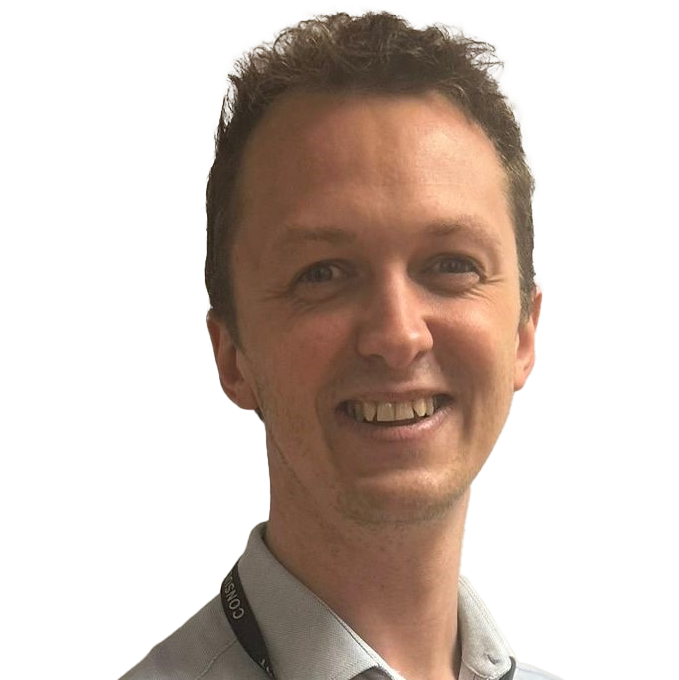

























As phase 2 of the medical training review gets underway, RCP censor Dr Dan Furmedge FRCP, consultant physician at Guy’s and St Thomas’ and training programme director for internal medicine training in south London, reflects for the RCP next generation campaign on how a practical, high-quality, alternative IMT pathway is offering fairness, structure and career progression for doctors without a training number.
For the past few years, I’ve been quietly running an experiment.
It started as a local response to a simple observation: we had brilliant FY3s, FY4s and international medical graduates working across our hospitals in central London who were more than capable of progressing into specialty training – but weren’t.
Some couldn’t secure an internal medicine training (IMT) post because competition ratios for specialty training places were growing so quickly. Others were stuck in locally employed jobs, working hard but gaining little structured educational value. And I was also observing that some doctors were being informally ‘signed off’ for IMT competencies with almost no evidence base at all.
It didn’t feel fair. And more importantly, it didn’t feel safe.
So, at Guy’s and St Thomas’ NHS Foundation Trust (GSTT), and now at Imperial College Healthcare NHS Trust and elsewhere, we decided to do something practical – we created a structured, high-quality, alternative IMT pathway.
We pulled together a group of motivated consultants, IMT tutors and service leads and asked them: if someone doesn’t have a national training number but is clearly capable, how do we give them a real chance to progress? Our answer was simple: to mirror IMT as closely as possible with:
- a formal rotation covering ICU, geriatrics, acute medicine, cardiology, nephrology and more
- the same curriculum and being assessed against the same annual review of competency progression (ARCP) decision aid as national IMT
- access to teaching, simulation (where possible), local ARCP panels and educational support
- a clear expectation that residents would be treated and assessed as an IMT doctor.
We also wanted the programme to feel personalised in a way that large, national structures sometimes can’t. We already know many of these doctors as FY3s and FY4s – we understand their strengths, their anxieties and their ambitions. That continuity creates a richer learning environment than the traditional 6-month hopscotch through unfamiliar teams. As we recruit and retain doctors for 2 or 3 years, we are invested in them, and they in us.
We’ve now supported a growing number of colleagues into IMT3 and subsequently into Group 1 or Group 2 specialties. Imperial is also recruiting doctors into a similar programme. When designed well, these pathways offer fairness, structure and career progression.
‘Watching someone grow over 2 or 3 years – not just clinically, but in confidence – is one of the most rewarding parts of my job. It’s exactly the apprenticeship-style learning that many of us experienced years ago, now adapted to modern training standards.’ – Dr Dan Furmedge, consultant physician
However, there are challenges which we can’t ignore:
- PACES inequity: doctors on alternative pathways aren’t prioritised for exam slots, although this is improving as the PACES backlog has significantly reduced.
- Timing of sign-off: we’re asked to commit to ‘anticipated outcomes’ before ARCP is complete. However, this is no different from a formal training programme, where residents apply for posts based on their projected success at ARCP.
- IMT3 availability: because IMT3 recruitment is still nationally controlled, we can’t always guarantee a third year locally – even when the doctor is thriving – as it depends on local availability of appropriate posts.
- Quality variation: some trust and health boards may not yet have the infrastructure or educational governance to deliver programmes safely.
These programmes are emerging because national pathways no longer meet workforce needs or the realities of modern medicine. The system is adapting from the ground up.
If we want to do this well – and protect doctors and patients – then we need to provide leadership, rather than simply observe change happening around us.
What do we need?
- National guidance or standards for alternative IMT pathways
Not a rigid blueprint, but a set of minimum expectations: curriculum requirements, supervision structures, governance processes and outcomes. - A mechanism for accreditation or endorsement
This would help trusts and health boards get started, reassure resident doctors, and give national bodies confidence in local delivery. - Support for smaller trusts and health boards
Many want to build programmes but lack the experience, templates or educational leadership capacity. A national network or mentoring model would help enormously. - Advocacy on exam access and equitable progression routes
If alternative pathways are accepted as legitimate – which they should be – then these doctors must be able to progress without unnecessary barriers.
The medical training system is changing, whether we like it or not. Locally employed doctors are no longer ‘temporary gap-fillers’ – they are an established, essential part of our workforce. And many deserve structured training every bit as much as those with training numbers.
If we embrace this moment, we can help shape a more flexible and realistic model of physician training – one that reflects the needs of modern healthcare and modern doctors.
Dr Dan Furmedge FRCP
RCP censor and consultant physician at Guy’s and St Thomas’ hospital